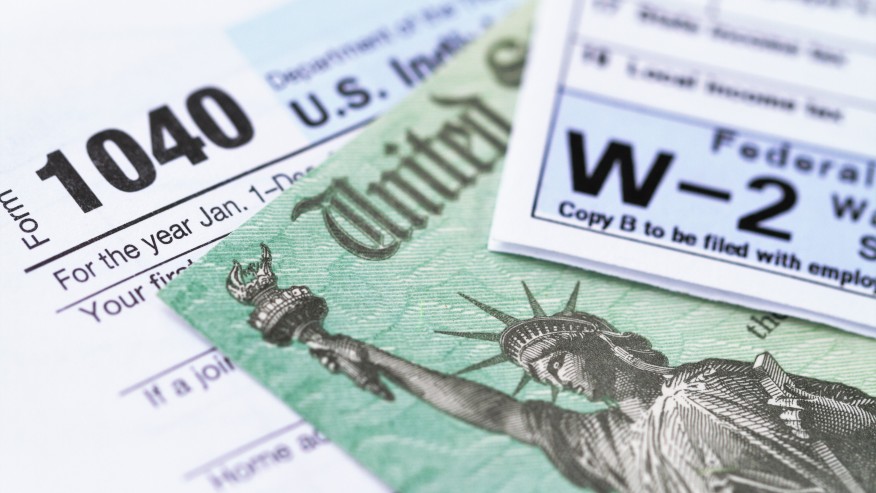
Filing Your Taxes in 2022 might be more complicated due to advanced child tax credit, stimulus check, and covid-19 pandemic economic relief measures.
Taxpayers can begin filing their taxes with the Internal Revenue Service (IRS) starting January 24 through April 18. The IRS has not said anything about extending the deadline.
Continue reading to learn how you can get a bigger tax refund this year.
What’s You Need to Know Before You File Your Taxes This Year?
Identify Theft
According to a Javelin Strategy & Research report, tax identity theft cost Americans nearly $56 billion last year.
Thieves stole 49 million consumers’ identities. They filed illicit tax returns in their names and claimed their refunds. (identity Protection Pin program offered by the IRS.
Here are a few tips from the IRS Taxpayer Guide to Identity Theft:
‘All taxpayers who can verify their identities are eligible for an Identity Protection PIN. The IP PIN is a 6-digit PIN that offers additional protections for your Social Security number on your tax return.”
- Multi-factor Authentication
“If you do your own taxes using an online provider, you have the option of using multi-factor authentication as another layer of protection. The IRS strongly encourages the use of this option. It helps prevent identity thieves from accessing your online account with your tax provider.”
“Example: SomethingYouCanRemember@30.”
Please go ahead and read the guide for more ways to protect your identity.
Letter 6419: Advanced Child Tax Credit
The Child Tax Credit (CTC) provides financial help to parents or guardians of children and other dependents.
On March 11, 2021, Congress passed, and President Joe Biden signed the American Rescue Plan, which enhanced the CTC.
It has increased from $2,000 per child in 2020 to 3,600 for each child under age 6. For each child ages 6 to 17, it has gone from $2,000 to $3,000
Last July, the government started sending monthly payments to families to provide immediate economic relief. Families who did not opt-out of advance payments received half their CTC in 2021.
Letter 6419 Includes:
- The total amount of 2021 advance Child Tax Credit payments
- Number of qualifying children used to calculate advance payments, and repayment protection when filing your 2021 federal tax return.
Taxpayers need to review their Letter 6419 to ensure that the number of qualifying dependents and the amount paid to them in 2021 are accurate.
All eligible families will get the other half of their CTC when they file their 2021 federal tax returns. Those who opted out of the advance payments will reach their total amount.
Letter 6475: 3rd Stimulus Check
Taxpayers eligible to receive stimulus checks but did not are in luck. The IRS will allow them to claim a recovery rebate credit for 2020 or 2021.
American taxpayers have received three rounds of stimulus payments since the beginning of the covid-19 pandemic:
- CARES Act-American taxpayers received up to $1,200 for individuals, $2,400 for married couples, and up to $500 for each qualified child.
- The Coronavirus Response and Relief Supplemental Appropriations Act– American taxpayers, received $600 per individual, including $600 per child dependent.
- The American Rescue Plan– American taxpayers, received $1,400, including qualified dependent.
Numerous taxpayers did not receive their third stimulus check under the American Rescue Plan for some odd reason. Letter 6475 will let taxpayers know if they are eligible to claim the
Earned Income Tax Credit (EITC)
The Earned Income Tax Credit (EITC) is a refundable tax credit for low-to-moderate-income working individuals. According to the IRS, to qualify for the EITC, you must:
- Have worked and earned income under $57,414
- Have investment income below $10,000 in the tax year 2021
- Have a valid social security number by the due date of your 2021 return
- Be a U.S citizen or resident alien all year
- Not file form 2555 (related to foreign earned income)
The Lookback Provision
Congress passed on March 11, 2021, and President Joe Biden signed the American Rescue Plan.
The law has a provision that allows taxpayers to use their 2019 income instead of their 2021 income to calculate EITC and Additional Child Tax Credit (ACTC) on their 2021 federal tax returns if doing so gives them a larger tax credit.
Choosing a Competent & Reputable Tax Preparer
Fraudulent tax preparers are as common as tax identity thieves. Tax seasons attract both scammers and incompetent tax preparers.
They can include errors, false information, or both on your tax return. Their actions can leave you open to liability for unpaid taxes, penalties, and interest.
IRS has a free directory of federal tax preparers; also, it offers free filing to taxpayers whose adjusted gross income (AGI) is under $73,000. The agency said that about 70% of people filing taxes in the U.S. could file them for free.
If you have been impacted by the actions of an unscrupulous tax preparer, you can report him for improper tax preparation practices to the IRS.
Filing Your Taxes
About 18 percent of U.S taxpayers prepare their tax returns every year via e-Filing or fillable forms. Again, if your AGI is under $73,00, you can file your federal return on the IRS Free File.
If AGI is above $73,000, you can use the IRS fillable form and mail your return.
You need to make sure to review the pros and cons of the numerous online tax software out there if you decide to use one of them.
IRS Backlog & Smaller Staff
IRS is dealing with backlog and smaller staff. They also took on additional responsibilities, including managing the government’s three rounds of economic reliefs programs and the enhanced child tax credit.
According to the National Taxpayer Advocate report, the agency has 8.6 million unprocessed individual returns and more than 3 million business returns leftover from 2021.
Taxpayers need to embrace themselves for significant delays and headaches for this tax season.
The Bottom Line
Filing taxes in 2022 will be more complicated than ever due to various changes. Taxpayers need to remain vigilant to protect themselves against tax frauds and other tax scams.
They also need to educate themselves on new changes to get all the credits and deductions available to them for a larger refund check.