
Biggest Financial Crimes: Tyco International
The estimated reading time for this post is 182 seconds
Biggest Financial Crimes: Tyco International
When people dwell on the enormous scope of finance, crime certainly does pay. In fact, over the years, various individuals and groups have committed some of the most significant financial crimes in history.
From bank frauds, stock market manipulations, and Ponzi schemes to insider trading and money laundering, these criminals have stolen billions of dollars from unsuspecting victims.
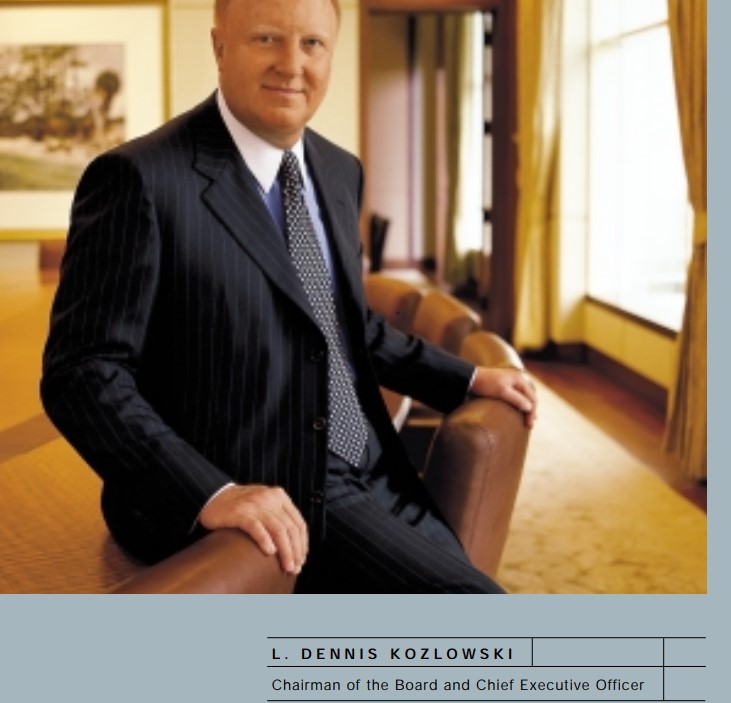
The Tyco International scandal is still one of the biggest embezzlement cases in the United States. Former CEO and Chairman Dennis Kozlowski and Chief Financial Officer Mark Swartz stole as much as 600 million from the company, including $430 million from illegal stock sales.
The Nationational White Collar Crime Center states that employee theft and embezzlement cost businesses and organizations more than $50 billion per year. Thirty percent of business bankruptcies are due to employee theft.
The 600-million heist significantly affected Typco International’s shareholders, stakeholders, and corporate auditors Pricewaterhouse Coopers.
Tyco International History
Arthur J Rosenberg founded the company in 1960. Tyco, Inc focused on governmental research and military experiment in the private sector during its startup phase.
In the mid-1980s, the firm had three main divisions- Electronics, packaging, and fire protection which Tyco would need to gain control of the financial fire that would scorch its balance sheet in the 2000s.
In 1992, Leo Dennis Kozlowski replaced John Fort as the Chief Executive Officer (CEO) of Tyco International. The former would later be charged on numerous counts of grand theft, securities fraud, 28 other counts of enterprise corruption.
Tyco International Growth
Tyco did not spend too much time in the startup or the growth phase. After its incorporation in Massachusetts in 1962, It quickly scaled its operations.
In 4 years, it acquired 16 companies to muster its distribution network and filed an initial public offering (IPO).
Tyco International
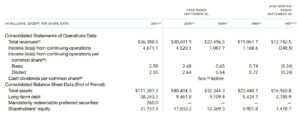
For the 2001 first year, Tyco reported a net income of $3.97 billion on total revenues of $36.9 billion. Also, it acquired CIT Group for $9.5 billion that same year.
Tyco Accounting Scandal
The Tyco International scandal or the egregious theft by Leo Leo Dennis Kozlowski and CFO Mark Swartz had two decades ago, but its remnants are still lingering.
The two men stole up to $600 million from Tyco International’s treasury. $430 million were from illegal stock sales, and $150 million were from questionable compensations.
There were visible red flags like in all corporate thefts, scandals, and frauds cases.
Acquisitions have been Tyco’s growth plan since its startup phase. It spent nearly $20 billion on acquisition for the year 2001 alone.
In the mid-1990s, analysts started asking questions about how the company was accounting for its acquisitions.
The Securities and Exchange Commission (SEC) launched an inquiry into the analysts’ claims in 1999 but failed to take action.
Tyco mentioned SEC inquiry in its 2001 Annual Report under the title “Cumulative Effect of Accounting Changes,” which stated that “they modified their revenue recognition policies which resulted in a net decrease of $241.1 million on total revenues.”
Tyco International Fate
Edward Breen took the helm of the troubled company in July 2002. He fired most of the company’s executives, including Mark H Swartz.
The accounting scandal has severely battered Tyco International. Nearly 7,200 people lost their job, its stock price never recovered from its $63 peak of mid-2001, and it had to pay out $2.92 billion to shareholders who felt that they were cheated.
Also, its corporate auditors, Pricewaterhouse Coopers, had to pay $225 million in damages to shareholders.
Tyco International is now a private company. The private equity firm Apollo Global acquired the former conglomerate for nearly $7 billion or $42 per share.
Both Mr. Kozlowski and Swartz were convicted to more than 8 years in prison and were paroled in 2014.


Pingback: Are Big Market Cap Companies Too Big to Fail - Business