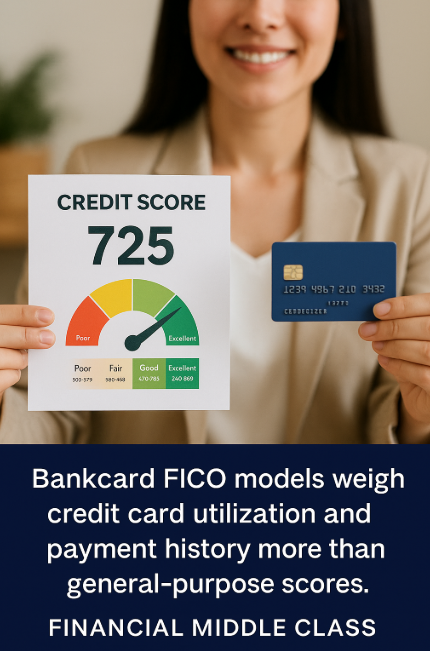
Credit card companies care about one thing above all: how you handle revolving debt. That’s why the Bankcard model weighs factors like utilization (your balances vs. limits) and card payment history much more heavily than loans or mortgages.
Example: The Balance Problem
Sarah has a 740 general FICO 8. Looks great on paper.
But she’s carrying balances of 80% of her limits on two cards.
Her Bankcard FICO drops to 690 because the model punishes high utilization heavily.
How This Impacts Approval
- At 740, Sarah might qualify for a premium rewards card with a $20,000 limit.
- At 690, she might only get approved for a basic card with a $3,000 limit — or be denied for premium cards entirely.
Common Borrower Questions
Q: Why do banks care so much about utilization?
A: Because it signals financial stress. High balances suggest you rely heavily on credit.
Q: Is it true that paying off all cards can lower your score?
A: Sometimes. Models like to see at least one small active account reporting, rather than all at zero.
Q: Do late payments on cards matter more?
A: Yes. A single missed card payment can drop a Bankcard FICO by 100 points or more.
How to Boost Before Applying
- Pay balances down below 10% before applying.
- Keep old cards open to lengthen history.
- Make sure at least one card reports a tiny balance.
🔟 Things Credit Card Applicants Need to Know
- Bankcard Scores Run 250–900 – A higher range than standard FICO.
- Utilization Is King – High balances hurt here more than anywhere else.
- Payment History Counts More on Cards – Miss a payment, and you’ll see an outsized drop.
- Mix Doesn’t Matter as Much – Card use outweighs loans or mortgages.
- Zero Balance Isn’t Always Best – Lenders like to see some active credit.
- Issuer-Specific Models Exist – Chase or Amex may tweak their own risk versions.
- Limits Are Score-Dependent – Better Bankcard scores = higher starting credit lines.
- Your Recent Behavior Matters Most – Last 12 months carry the heaviest weight.
- Too Many Apps = Red Flag – Multiple inquiries suggest risk-seeking.
- You Can See Bankcard Scores – MyFICO includes them in its full package.
🔟 Common Mistakes Credit Card Borrowers Make
- Maxing Out Cards – Even if you pay off later, statement balances count.
- Missing Just One Payment – Heavier penalty here than on auto or mortgage loans.
- Applying for Multiple Cards Too Quickly – Looks desperate to lenders.
- Closing Old Cards – Cuts your credit history and available credit.
- Ignoring When Balances Post – Scores are calculated on reported balances, not just what you owe.
- Overusing Store Cards – Lower limits and high utilization ratios drag scores down.
- Not Understanding Issuer Rules – Internal risk models can matter as much as your score.
- Reporting All Zero Balances – Can shave points off; let one small balance report.
- Confusing Rewards With Risk – A travel card doesn’t cancel out bad credit habits.
- Believing FICO 8 = Bankcard FICO – They can differ by 30–50 points.
Related Reads:
Why You Have More Than One Credit Score — And Which Ones Lenders Actually Use
Credit Scores for Car Buyers: What Dealers Really Look At
Mortgage Credit Scores Explained: Why Lenders Use Old FICO Versions
Alternative Credit Scores: Rent, Utilities, and UltraFICO
Final Word on Credit Card Scores
Your Bankcard FICO isn’t just another number — it’s the score that determines whether you’ll walk away with a premium rewards card and a five-figure credit limit, or a denial. Issuers care less about your mortgage history and more about how you’ve handled credit cards themselves.
Keep balances low, never miss a due date, and understand that this model magnifies your revolving credit behavior. That’s how you move from rejection letters to premium approvals.



Pingback: Mortgage Credit Scores Explained: Lenders Still Use Old FICO