Rise of the Global Middle Class: Opportunities and Challenges
By MacKenzy Pierre
The estimated reading time for this post is 436 seconds
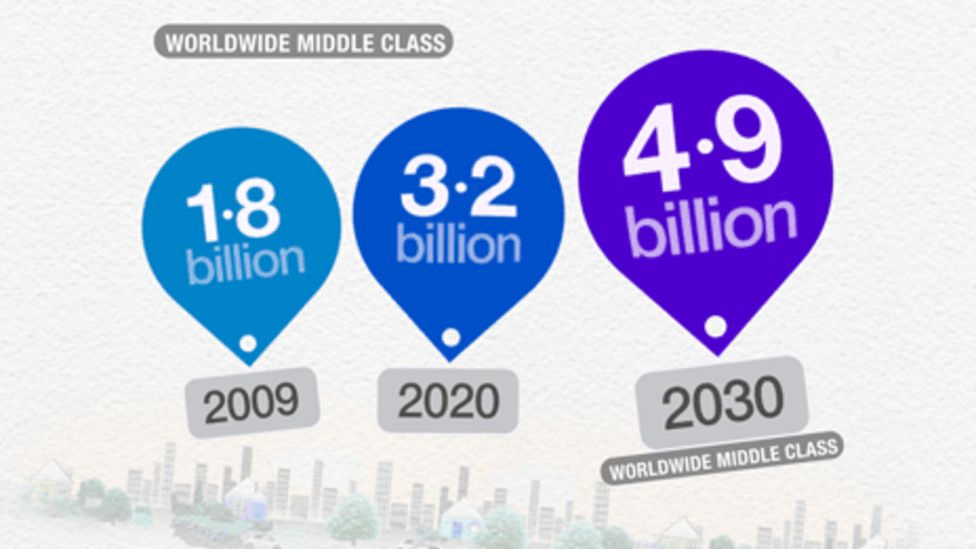
In recent years, there has been an unprecedented expansion of the global middle class. According to the World Bank, between 1990 and 2015, the percentage of people living in extreme poverty fell from 36% to 10%, and the global middle class grew from 1.8 billion to 3.2 billion.
This expansion has been driven by economic growth, urbanization, and rising education levels in developing countries.
At the same time, the middle class in Organization for Economic Co-operation and Development (OECD) countries has been experiencing stagnation or even decline.
In this article, we will explore the reasons behind the contrasting fortunes of the global middle class and the OECD middle class and what this means for the future of the world economy.
What is the Middle Class?
Before we dive deeper into the topic, let us first define what we mean by the middle class. The middle class refers to people with a certain income level, education, and social status. This group is typically characterized by financial stability, access to healthcare, education, and social mobility.
In most OECD countries, the middle class is defined as households with between 75% and 200% of the median income.
However, the definition of the middle class varies widely depending on the country and context. For example, a family living on $10 a day may be considered middle class in developing countries. This income level would be regarded as below the poverty line in OECD countries.
The Expansion of the Global Middle Class
The global middle class has been growing unprecedentedly over the past few decades. Several factors, including economic growth, urbanization, and rising education levels, have driven this.
Economic Growth
Economic growth has been the most significant driver of the expansion of the global middle class. Over the past few decades, developing countries have experienced rapid economic growth, leading to increased incomes and improved living standards.
According to the World Bank, between 1990 and 2015, the number of people living in extreme poverty fell from 36% to 10%, and those in the middle class grew from 1.8 billion to 3.2 billion.
Some of the countries that have made significant progress in reducing extreme poverty during this period include:
- China: China’s economic growth and poverty reduction programs have been instrumental in lifting hundreds of millions of people out of poverty. According to the World Bank, China’s poverty rate fell from 66% in 1990 to 0.6% in 2016.
- India: India has also significantly reduced extreme poverty over the past few decades. According to the World Bank, India’s poverty rate fell from 45% in 1993 to 13.4% in 2015.
- Bangladesh: Bangladesh has made remarkable progress in reducing poverty since the 1990s. According to the World Bank, Bangladesh’s poverty rate fell from 60% in 1990 to 24.3% in 2016.
- Indonesia: Indonesia has also seen a significant reduction in poverty over the past few decades. According to the World Bank, Indonesia’s poverty rate fell from 32% in 1999 to 9.4% in 2020.
- Vietnam: Vietnam has achieved remarkable progress in reducing poverty since the 1990s. According to the World Bank, Vietnam’s poverty rate fell from 58% in 1993 to 2.7% in 2020.
Urbanization
Urbanization has also played a significant role in expanding the global middle class. As more people move to cities, they are more likely to find jobs with higher wages and better benefits. This has led to an increase in disposable income, which has enabled many people to move up the income ladder.
Disposable income is the amount of money a person or household has available after taxes and other deductions are taken from their income. The income is left over to be spent or saved as the individual or household sees fit. In other words, disposable income is the money a person or household has to spend on goods and services, investments, or to save for the future.
Rising Education Levels
Rising education levels have also contributed to the growth of the global middle class. As more people access education, they can find higher-paying jobs and improve their living standards.
This has also led to a rise in social mobility, as people can move up the income ladder through education and hard work.
The Stagnation and Decline of the OECD Middle Class
While the global middle class has been expanding, the middle class in OECD countries has been experiencing stagnation or even decline.
OECD comprises 38 member countries, including many of the world’s most advanced and prosperous economies; its purpose is to promote policies that will improve people’s economic and social well-being worldwide.
OECD provides a forum where member countries can share their experiences and work together to address common economic, social, and environmental challenges.
The organization conducts research, provides policy advice, and facilitates cooperation among member countries in various areas, including Economic growth and development, International trade, Environmental sustainability, and more. Several factors have driven the decline of the OECD Middle Class, including technological change, globalization, and changes in labor markets.
Technological Change
Technological change has been one of the most significant drivers of the decline of the middle class in OECD countries.
As automation and artificial intelligence continue to advance, many jobs previously done by humans are becoming automated.
This has led to a decline in the demand for middle-skill jobs, such as manufacturing and administrative jobs traditionally held by the middle class.
Globalization
Globalization has also played a significant role in the decline of the middle class in OECD countries. As more jobs are outsourced to developing countries, many workers in OECD countries have lost their jobs, particularly in manufacturing industries.
This has led to a decline in wages and job security for many middle-class workers, making it more difficult for them to maintain their middle-class status. The world has become flatter since Tom Friedman published his mega-bestseller book, “The World Is Flat,” in 2005. It’s easier for individuals and businesses to compete globally.
Changes in Labor Markets
Changes in labor markets have also contributed to the decline of the middle class in OECD countries. The rise of the gig economy and the prevalence of part-time work have made it more difficult for workers to find stable, full-time jobs with benefits.
This has led to a decline in job security and a rise in income inequality, which has made it more difficult for many people to maintain their middle-class status.
The Impact of the Contrasting Fortunes of the Global and OECD Middle Class
The contrasting fortunes of the global middle class and the OECD middle class have significant implications for the future of the world economy. On the one hand, expanding the global middle class represents an important market opportunity for businesses worldwide.
As more people in developing countries move up the income ladder, they will have more disposable income to spend on goods and services, creating new markets for businesses to explore.
At the same time, the decline of the middle class in OECD countries represents a significant challenge for policymakers. As more people fall out of the middle class and into poverty, they may require additional support from the government in the form of social welfare programs, which can strain public finances.
Additionally, the decline of the middle class can lead to political instability and social unrest as people become frustrated with their economic situation and demand change.
The Brexit Referendum in the United Kingdom, Gilets Jaunes or the Yellow Vests and current pension protests in France, and Occupy Wall Street in the United States are political movements that show the level of economic anxiety of the OECD Middle Class.
Policy Implications
To address the challenges facing the middle class in OECD countries, policymakers must take a holistic approach that addresses the underlying drivers of economic insecurity. This may include investing in education and training programs to help workers acquire the skills they need to succeed in a changing labor market.
It may also include policies that support small businesses and entrepreneurship, which can create new jobs and stimulate economic growth.
In addition, policymakers may need to address the rising levels of income inequality, which can undermine social cohesion and lead to political instability. This may include implementing progressive tax policies, increasing the minimum wage, and providing additional support to low-income households.
Conclusion
The expansion of the global middle class represents a significant achievement for the world economy, as more people worldwide can enjoy a higher standard of living.
However, the contrasting fortunes of the global and OECD middle class also represent a significant challenge for policymakers as they seek to address the underlying drivers of economic insecurity and promote long-term economic growth.
By investing in education, training, and entrepreneurship, policymakers can help workers acquire the skills they need to succeed in a changing labor market.
Additionally, by addressing income inequality and providing additional support to low-income households, policymakers can promote social cohesion and help ensure that the benefits of economic growth are shared more equitably.

Senior Accounting & Finance Professional|Lifehacker|Amateur Oenophile
RELATED ARTICLES
The American Middle Class’s Guide to the 2026 Midterm Ballot Measures
The 2026 midterm elections will put major housing and tax proposals before American voters. From Florida's homestead exemptions to Massachusetts zoning reform and California's affordable housing initiatives, explore the potential effects on homeowners, renters, first-time buyers, and middle-class finances.
Fair Capitalism: We Don’t Need to Abolish Capitalism. We Need to Fix It.
Fair capitalism means preserving entrepreneurship and profits while ensuring working Americans share more meaningfully in the prosperity they help create.
Leave Comment
Cancel reply
Gig Economy
American Middle Class / Oct 16, 2026
The American Middle Class’s Guide to the 2026 Midterm Ballot Measures
The 2026 midterm elections will put major housing and tax proposals before American voters. From Florida's homestead exemptions to Massachusetts zoning reform and California's affordable housing...
By Article Posted by Staff Contributor
Personal Finance / Oct 14, 2026
FICO Finally Has Competition. Will Homebuyers Get a Better Deal?
For decades, FICO dominated mortgage credit scoring. Now VantageScore 4.0 is challenging that dominance. Discover how new rules from federal housing regulators could affect mortgage approvals,...
By Article Posted by Staff Contributor
American Middle Class / Oct 13, 2026
Selling Affordability Through Installments
Americans are increasingly buying based on what they can afford each month rather than what something actually costs. From buy now, pay later services to longer...
By Article Posted by Staff Contributor
American Middle Class / Oct 12, 2026
Fair Capitalism: We Don’t Need to Abolish Capitalism. We Need to Fix It.
Fair capitalism means preserving entrepreneurship and profits while ensuring working Americans share more meaningfully in the prosperity they help create.
By MacKenzy Pierre
American Middle Class / Oct 12, 2026
The Sunday Scaries: How Financial Independence Can Help You Reclaim Your Weekend
The Sunday Scaries can begin long before Monday morning. Building emergency savings, lowering monthly expenses, and increasing financial independence may help you reclaim your weekend.
By Article Posted by Staff Contributor
Business / Aug 08, 2026
The Missing Middle in Black Entrepreneurship
Black entrepreneurship has expanded dramatically. The next challenge is helping more Black-owned businesses move from self-employment to employer firms and sustainable scale.
By FMC Editorial Team
Personal Finance / Aug 01, 2026
Cash Strategy: Put Every Dollar in the Right Place
Your checking account, emergency fund, short-term savings, and investments should not be managed the same way. This cash strategy helps assign every dollar to the right...
By Article Posted by Staff Contributor
Personal Finance / Aug 01, 2026
Best HYSA: How to Choose Beyond the Highest APY
A competitive interest rate matters, but it is only one part of choosing a high-yield savings account. Compare insurance, fees, access, transfer speed, and promotional conditions.
By Article Posted by Staff Contributor
Personal Finance / Aug 01, 2026
High-Yield Savings vs. CDs, Treasury Bills, and Other Safe Places for Cash
High-yield savings accounts are excellent for accessible cash, but they are not always the best choice. Compare HYSAs, CDs, Treasury bills, money market accounts, and I...
By Article Posted by Staff Contributor
American Middle Class / Aug 01, 2026
High-Yield Savings Accounts: A Safer Home for Your Cash
A high-yield savings account can pay several times the national savings rate while keeping qualified deposits federally insured. Here is how it works, what to watch...
By Article Posted by Staff Contributor
Latest Reviews
American Middle Class / Oct 16, 2026
The American Middle Class’s Guide to the 2026 Midterm Ballot Measures
The 2026 midterm elections will put major housing and tax proposals before American voters. From...
Personal Finance / Oct 14, 2026
FICO Finally Has Competition. Will Homebuyers Get a Better Deal?
For decades, FICO dominated mortgage credit scoring. Now VantageScore 4.0 is challenging that dominance. Discover...
American Middle Class / Oct 13, 2026
Selling Affordability Through Installments
Americans are increasingly buying based on what they can afford each month rather than what...