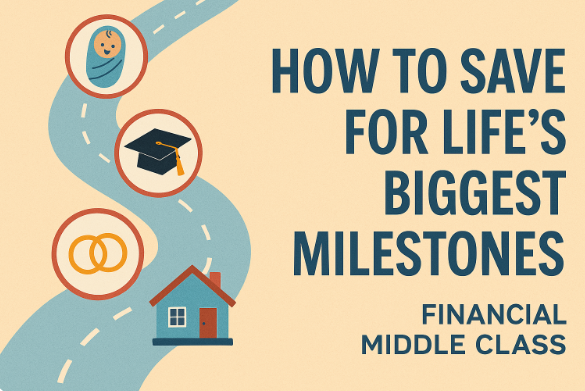
Life doesn’t just happen in the everyday grind. It happens in moments that shape us—graduations, weddings, first homes, anniversaries, retirement, and even how we leave a legacy. These milestones are exciting, but let’s be real: they’re also expensive. The difference between being ready and being blindsided often comes down to one thing—how well you planned ahead.
In this guide, I’ll walk you through how to save for major milestones at every stage of life, with real numbers, practical tips, and examples you can actually use.
Birth & Childhood: Building a Foundation Early
The costs of raising a child start before the baby comes home. Diapers, childcare, and eventually education all add up.
💡 Tip: Set up a Florida 529 Savings Plan as soon as possible. You can start with just $25 a month. If you commit to $250 monthly from birth until your child turns 18, you could grow a nest egg close to $90,000—enough to cover a significant chunk of in-state tuition and fees.
Don’t forget to revisit your health and life insurance, too. Protecting your family from the unexpected is part of saving wisely.
High School Graduation: Tuition & The First Car
Graduation isn’t just about caps and gowns—it’s often the gateway to college and the first set of car keys.
- A Honda Civic, one of the most popular starter cars, costs around $25,000 new or $15,000–$20,000 used in 2025. Plan for this expense so it doesn’t derail your budget.
- Keep saving automatically for tuition. Even $100 a month from the time your child is born reduces reliance on loans.
- Teach them about money. Nonprofits like Junior Achievement USA, Operation HOPE, Inc., and the National Endowment for Financial Education (NEFE) offer free resources to help teens build financial skills before they head off on their own.
First Serious Relationship: Love Meets Money
Talking about money isn’t romantic, but it’s essential.
- Schedule “money dates” to discuss debt, savings goals, and credit history.
- Create a joint “future fund” if you’re serious about long-term plans.
- Not ready to merge bank accounts? That’s fine—but set clear rules for who pays for what (rent, groceries, vacations). Many couples thrive with a hybrid approach: individual accounts plus a shared household account.
Marriage or Partnership: Planning Beyond the Wedding
Here’s the truth: weddings can cost as much as a car or a down payment on a house.
A wedding with 100 guests typically runs $25,000–$35,000 depending on venue, catering, and extras like photography. Covering this with cash—not debt—means starting your marriage without financial baggage.
From there, focus on:
- Building a joint emergency fund (3–6 months of expenses).
- Aligning your long-term financial goals, whether that’s homeownership, kids, or travel.
First Major Purchase: Cars, Homes, & Big-Ticket Items
- For cars: Aim for a 20% down payment to stay above water on your loan.
- For homes: Save 20% down to avoid private mortgage insurance (PMI). Don’t forget taxes, closing costs, and repairs.
- For other big-ticket items: Use a sinking fund—a dedicated savings account where you add a little each month until you can pay in full.
Investments & Retirement Planning: Playing the Long Game
This isn’t one milestone; it’s the soundtrack of your life.
- Start with your employer plan (401k or 403b). If your company matches 50% up to 6% of your salary, and you make $60,000, contributing 6% ($3,600) earns you another $1,800 in free money every year.
- Diversify—mix stocks, bonds, and retirement accounts.
- Think long-term—compound interest rewards early savers.
Major Anniversaries: 25th, 50th, & Beyond
Celebrating decades together should bring joy, not debt.
- A Hawaiian vacation for two: $8,000–$12,000.
- A European trip: $15,000–$20,000 for two weeks of airfare, hotels, and meals.
Set up a celebration fund years ahead of time. Borrowing for a milestone trip turns good memories into expensive regrets.
Retirement Adventures: Redesigning Life
Retirement isn’t about quitting work; it’s about choosing what’s next.
- Test-drive your retirement budget. Live for six months on what you expect to spend.
- Healthcare planning. Medicare helps, but it doesn’t cover everything.
- Part A: Hospital stays.
- Part B: Outpatient services like doctor visits.
- Part C: Medicare Advantage—bundled coverage with extras like dental and vision.
Expect to spend $6,000–$8,000 annually on healthcare even with Medicare.
- Fund passions—whether that’s travel, volunteering, or finally starting that side business.
End of Life Planning: Protecting Your Legacy
It’s not pleasant to think about, but end-of-life planning saves your family stress, money, and conflict.
- Probate fees can eat up 3–7% of your estate’s value.
- Family feuds are real. Jimmy Buffett’s widow, for example, reportedly faced legal battles over his $275 million estate—a reminder that even wealth doesn’t prevent disputes without clear planning.
- Write a will.
- Assign powers of attorney.
- Consider charitable giving, trusts, or life insurance to extend your legacy.
Final Thoughts: Saving = Freedom
The milestones of life—births, weddings, graduations, retirements—aren’t just expenses. They’re opportunities to create lasting memories. Saving for them is less about sacrifice and more about freedom: freedom from debt, freedom to say yes, and freedom to live life on your terms.
Start small, stay consistent, and watch how ready you’ll feel when life’s biggest moments arrive.