How Money Habits Form—and Why “Self-Control” Is the Wrong Villain
By FMC Editorial Team
The estimated reading time for this post is 712 seconds
The tap is so quiet now you can miss it.
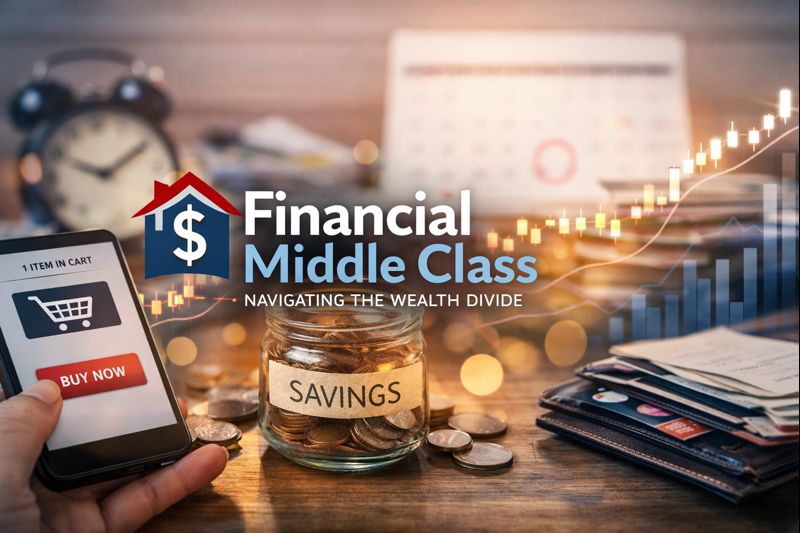
A couple in line at a pharmacy, a commuter grabbing coffee, a parent buying batteries at the last minute—everyone has learned the same choreography: phone comes out, wrist tilts, a gentle vibration confirms the transaction, and life keeps moving. No cash. No counting. No moment of pain that says, Are you sure? The money disappears the way water disappears down a drain.
This is how we live: in an economy designed to make spending feel like nothing. And then we act surprised when spending becomes… everything.
When people talk about “bad money habits,” they usually reach for the moral vocabulary—discipline, responsibility, willpower, impulse. That language is comforting, in a way. If the problem is personal weakness, then the solution is personal strength. We can blame ourselves and call it empowerment.
But the evidence tells a different story. Money habits don’t form because you’re lazy, dumb, or broken. They form because the brain is a learning machine, and modern life is one long lesson in how to buy things quickly.
The real conflict isn’t between you and your “self-control.” It’s between a brain built for shortcuts and a marketplace built to exploit them.
The lie we keep repeating: “It’s just choices.”
Most people don’t run their financial lives like an accountant. They run them like a human being: stressed, time-starved, distracted, occasionally hopeful, often tired. The brain responds to that environment the way it always has—by automating.
That automation is what we call a habit. Not a personality trait. Not a moral stance. A habit is simply a behavior that becomes increasingly automatic in a stable context. And the contexts around money—paydays, bills, ads, apps, social pressure—are among the most stable contexts we have.
The hardest part of accepting this is that it undermines the modern American sermon: if you want it badly enough, you’ll do it. The data doesn’t quite cooperate.
A landmark meta-analysis by Webb and Sheeran found that when experiments meaningfully changed people’s intentions, behavior moved much less. In other words: even when people genuinely want to change, they often don’t. The meta-analysis reported a medium-to-large change in intention (d = 0.66) producing only a small-to-medium change in behavior (d = 0.36).
That gap is the graveyard of New Year’s resolutions and “starting Monday” budgets. It’s also the reason an economy can keep telling you to “make better choices” while offering you infinite ways to not do that.
Habits form slower than your guilt does
The other cultural lie is the “21 days” myth—the idea that transformation is a quick sprint, and if you don’t feel different by week three, you’re failing. A 2024 systematic review and meta-analysis of habit formation studies looked at how long it takes habits to form (in health-related behaviors) and found reported medians around 59–66 days, with means around 106–154 days, and a stunning range of 4 to 335 days across individuals.
Read that again: the range goes from four days to nearly a year.
The important lesson is not “habits take two months.” It’s that habit formation is variable, slow, and human. The “quick fix” narrative doesn’t just misinform— it produces shame. People give up not because they lack ability, but because they misread the timeline. They assume struggle means they’re defective. In reality, struggle is often just… Tuesday.
Now translate this to money.
A habit like “transfer $25 on payday” is simple and repeatable; it can become automatic sooner because the cue is stable. A habit like “track discretionary spending across five categories while managing unpredictable bills and childcare” is complex; it will take longer, and it will never be perfectly frictionless. The habit isn’t “being a perfect budgeter.” The habit is “showing up.”
The money habit loop: cue → response → reward
To understand money habits, you don’t need a personality test. You need a flashlight.
Most money habits follow a loop:
- Cue: A trigger—payday, stress, boredom, a notification, a store, a fight, a feeling.
- Response: The behavior—shopping, scrolling, avoidance, checking balances obsessively, putting something on a card.
- Reward: The payoff—relief, pleasure, status, distraction, control, numbness.
That last part—the reward—is where money becomes emotional. Spending often offers immediate relief. Saving offers delayed safety. One feels like a warm blanket; the other feels like a chore.
If you’ve ever bought something you didn’t need after a hard day and felt oddly calm afterward, you’ve experienced the reward. Your brain learned: this works.
And brains, when they find something that works, try to make it automatic.
In the old world, there were limits: you had to drive to a store, carry cash, stand in line. In the new world, you can spend at 1:12 a.m. in bed with your thumb. That’s not just convenience. It’s a radical reduction in friction, and friction is where good intentions go to become real.
The “if–then” upgrade: turning intentions into behavior
If intentions aren’t enough, what is?
One answer is surprisingly simple: make the plan specific enough that the brain can run it like a script.
Implementation intentions—often phrased as “if–then” plans—have been studied for decades. The classic meta-analysis by Gollwitzer and Sheeran found that forming implementation intentions produced a medium-to-large effect on goal attainment (d ≈ 0.65).
This matters for money because money problems are often moment problems. You don’t blow your budget in theory. You blow it at a particular time, in a particular mood, on a particular app, after a particular stressor.
“If–then” plans don’t rely on you being heroic. They rely on you being predictable.
- If it’s payday, then I transfer $50 to savings before I do anything else.
- If I want to buy something over $100, then I wait 24 hours.
- If I’m about to open a shopping app because I’m stressed, then I take a five-minute walk and check my balance first.
These aren’t affirmations. They’re pre-decisions—small pieces of infrastructure for the mind.
Defaults: the invisible hand on your wallet
If–then plans are the personal version of something bigger: defaults.
Defaults are the quiet power behind many of the decisions we think we made freely. Opt-out retirement plans. Pre-selected donation amounts. Automatic renewals. The “recommended” option in a menu of confusing choices.
A major meta-analysis of default effects found that opt-out defaults lead to greater uptake than opt-in defaults, with a medium-sized effect (d = 0.68).
In other words: people don’t just choose what they want. They often choose what’s already chosen.
This is not inherently evil. Defaults can be used for good—automatic retirement contributions, automatic savings, automatic bill pay that prevents late fees and credit hits. But defaults can also be used to quietly harvest money: subscription renewals that are easy to start and annoying to stop, “trial” periods that roll into charges, BNPL options that normalize splitting a $40 purchase into four payments like it’s a lifestyle.
The deeper point is political: we don’t live in a neutral environment. Someone designs the choice architecture. Someone benefits.
So when society tells you to “be responsible,” it’s worth asking: responsible against what system?
Financial self-control: the science of making temptation harder
Self-control is often framed as inner strength. But in the research, effective self-control is frequently environmental engineering—changing what’s available, when, and how.
A meta-analysis of financial self-control strategies found that across 29 studies and 12 strategies, these approaches reduced spending and increased saving with a medium effect size (d = 0.57). It also found proactive strategies (set up in advance) and reactive strategies (used in the moment) were similarly effective.
This is a quiet rebuke to the “just try harder” crowd. The most effective people aren’t always the most disciplined. They’re often the most strategic.
Proactive strategies look like:
- separating money into accounts so bills aren’t competing with wants
- removing stored cards from shopping apps
- setting up automatic transfers
Reactive strategies look like:
- a waiting rule before checkout
- leaving items in the cart until the next day
- opening your banking app before you buy anything discretionary
These aren’t moral victories. They’re friction tactics—ways of making it slightly harder to do the thing you’ll regret and slightly easier to do the thing you’ll thank yourself for.
The cashless effect: when spending stops feeling like spending
And then there’s the payment method itself.
A 2024 meta-analysis on the “cashless effect” synthesized 71 papers and 392 effect sizes and concluded that consumers spend more when using cashless methods versus cash—a small but significant effect—though it varies by context and has weakened over time.
This is not an argument to go live off cash like it’s 1993. It’s an argument to recognize that payment technology changes psychology.
Cash is tactile. You see it leaving your hand. Cards and phones are abstract. They turn spending into a number that vanishes later. The modern economy has worked very hard to remove the sensation of loss from the act of spending. That’s a feature, not a bug.
If you’re trying to rebuild your money habits, you don’t need purity. You need leverage. Sometimes that means making certain categories “cash-like”—a separate debit card for discretionary spending, or setting app limits, or removing the ability to check out in ten seconds.
A society that can make spending frictionless can also help make saving frictionless. Which brings us to the intervention we love to overpromise: education.
Financial education: useful, but not a magic spell
America has a habit of treating financial education like a civic sacrament: teach the people about compound interest and watch the nation’s credit scores rise like hymns.
But education works best when it changes behavior through structure, not just understanding.
A 2020 NBER meta-analysis of 76 randomized experiments (over 160,000 participants) found that financial education has positive causal effects on financial knowledge and behaviors. The paper reports an average effect size across outcomes around 0.123 standard deviation units, with a median around 0.098. Those are meaningful—but they’re not miracles. They are nudges, not transformations.
The hidden lesson is that knowing what to do is only half the battle. The other half is having a life that makes doing it feasible—stable income, manageable bills, time, and the absence of constant emergencies.
Which raises the question that personal finance influencers often avoid because it ruins the vibe: what happens to habit formation when life is financially scarce?
Scarcity taxes the brain—and your habits pay the price
One of the cruelest things about being broke is that it’s cognitively expensive.
A 2024 meta-analysis on financial scarcity and cognitive performance found a detrimental overall association (Hedges’ g = -0.43) across 256 effect sizes and more than 111,000 respondents, with the partial effect shrinking to around g = -0.15 when accounting for education.
There’s a nuance here: the relationship is complicated, and education explains a lot. But the practical implication is straightforward. If you’re under financial strain, you’re often trying to build “good money habits” with reduced bandwidth. Not because you’re weak—because stress consumes attention.
In that reality, the standard advice (“track every dollar,” “meal prep on Sundays,” “optimize your portfolio”) can sound like telling someone to learn piano while their house is on fire.
What helps under scarcity is not complexity. It’s automation, simplification, and mercy.
- one automatic savings transfer, even if small
- one bill moved to autopay
- one weekly 10-minute check-in
- one spending rule that prevents the most damaging moments
This isn’t settling. It’s strategy. A habit that works at your worst is worth more than a plan that only works at your best.
So what do we do—personally, and politically?
Here’s the uncomfortable synthesis of the meta-analyses: the strongest levers for changing money behavior are not the ones we like to talk about.
They are:
- specific planning (if–then scripts)
- default design and automation
- self-control strategies that add or remove friction
These levers work because they respect how humans actually behave.
And once you accept that, a second truth becomes unavoidable: a lot of “personal finance” is policy disguised as personality.
If defaults are powerful, why are so many defaults designed to extract money rather than build stability? If friction shapes behavior, why is the economy removing friction from spending while leaving saving and debt payoff as manual labor? If scarcity undermines bandwidth, why do we build systems—healthcare billing, debt collection, fee structures—that generate constant scarcity-like stress?
A serious society would apply the same behavioral insights to public design that it uses in marketing.
- Make emergency savings opt-out in payroll systems, not opt-in.
- Require clearer cancellation pathways and limit predatory auto-renewal tricks.
- Regulate “dark patterns” that turn a moment of vulnerability into a subscription.
- Encourage retirement and savings defaults the way we encourage consumption defaults.
This is not paternalism. It’s realism. Someone is already shaping your behavior; the only question is who and for whose benefit.
A practical framework for building one money habit that sticks
If you want a starting point that matches the evidence and respects real life, use this three-part design:
- Pick one stable cue.
Payday. Sunday evening. The day rent is due. A recurring moment you can actually predict. - Write one if–then script.
“If it’s payday, then $25 transfers immediately.”
Make it small enough to do even in a hard month. - Turn it into a default.
Automate it so you don’t have to win an argument with yourself every time.
Then—and this is the part most advice skips—treat the first 60 days like a training phase, not a test of identity. Habit formation timelines are longer than our cultural myths admit.
Your goal isn’t perfection. Your goal is repetition under real conditions.
Because money habits aren’t built in spreadsheets. They’re built in moments: tired moments, anxious moments, celebratory moments, lonely moments—moments when the brain reaches for what it knows.
And the way you change your financial life isn’t by becoming a different person overnight.
It’s by teaching your brain a better shortcut—and then making that shortcut the easiest road home.

RELATED ARTICLES
Cash Strategy: Put Every Dollar in the Right Place
Your checking account, emergency fund, short-term savings, and investments should not be managed the same way. This cash strategy helps assign every dollar to the right financial job.
Best HYSA: How to Choose Beyond the Highest APY
A competitive interest rate matters, but it is only one part of choosing a high-yield savings account. Compare insurance, fees, access, transfer speed, and promotional conditions.
Leave Comment
Cancel reply
Gig Economy
Business / Aug 08, 2026
The Missing Middle in Black Entrepreneurship
Black entrepreneurship has expanded dramatically. The next challenge is helping more Black-owned businesses move from self-employment to employer firms and sustainable scale.
By FMC Editorial Team
Personal Finance / Aug 01, 2026
Cash Strategy: Put Every Dollar in the Right Place
Your checking account, emergency fund, short-term savings, and investments should not be managed the same way. This cash strategy helps assign every dollar to the right...
By Article Posted by Staff Contributor
Personal Finance / Aug 01, 2026
Best HYSA: How to Choose Beyond the Highest APY
A competitive interest rate matters, but it is only one part of choosing a high-yield savings account. Compare insurance, fees, access, transfer speed, and promotional conditions.
By Article Posted by Staff Contributor
Personal Finance / Aug 01, 2026
High-Yield Savings vs. CDs, Treasury Bills, and Other Safe Places for Cash
High-yield savings accounts are excellent for accessible cash, but they are not always the best choice. Compare HYSAs, CDs, Treasury bills, money market accounts, and I...
By Article Posted by Staff Contributor
American Middle Class / Aug 01, 2026
High-Yield Savings Accounts: A Safer Home for Your Cash
A high-yield savings account can pay several times the national savings rate while keeping qualified deposits federally insured. Here is how it works, what to watch...
By Article Posted by Staff Contributor
Real Estate / Jul 30, 2026
Mortgage Lock-In Is Freezing the Housing Market
Millions are trapped by 3% mortgages. Learn how mortgage lock-in worsens affordability—and why homeowners are renovating instead.
By FMC Editorial Team
Real Estate / Jul 26, 2026
Is South Florida More Expensive Than New York? The Complete 2026 Relocation Guide
Is South Florida more expensive than New York? Compare housing, taxes, insurance and 104 municipalities before you move.
By Article Posted by Staff Contributor
Personal Finance / Jul 25, 2026
The Time Value of Life Experiences: What Compound Interest Leaves Out,
Money compounds, but life experiences do too. Explore what compound interest leaves out—and how to balance saving with living.
By MacKenzy Pierre
American Middle Class / Feb 18, 2026
How Wealth Is Passed Across Generations in the United States: Mechanisms, Evidence, and the Policy Debate
How wealth passes between generations—trusts, taxes, and the debate. Get the facts, figures, and tradeoffs. Read now.
By FMC Editorial Team
American Middle Class / Feb 16, 2026
The S&P 7,000: How Wall Street Disconnects from Main Street
S&P 7,000 can rise while wages, benefits, and towns fall behind. See why the market isn’t the economy—read now.
By MacKenzy Pierre
Latest Reviews
Business / Aug 08, 2026
The Missing Middle in Black Entrepreneurship
Black entrepreneurship has expanded dramatically. The next challenge is helping more Black-owned businesses move from...
Personal Finance / Aug 01, 2026
Cash Strategy: Put Every Dollar in the Right Place
Your checking account, emergency fund, short-term savings, and investments should not be managed the same...
Personal Finance / Aug 01, 2026
Best HYSA: How to Choose Beyond the Highest APY
A competitive interest rate matters, but it is only one part of choosing a high-yield...