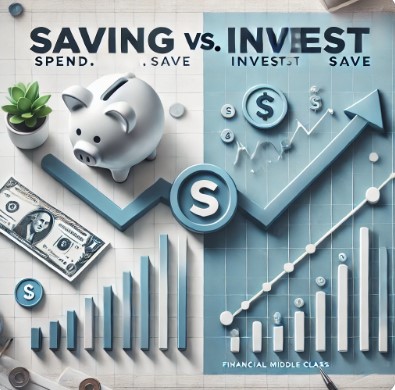
When managing your finances, two terms often pop up: saving and investing. But what’s the difference, and how do you decide which one’s right for you? Understanding these concepts can help you make smarter money moves, especially if you’re aiming for long-term financial stability.
What is Saving?
Saving is about setting aside money for short-term needs or unexpected expenses. Think of it as your financial safety net for life’s curveballs—car repairs, medical bills, or job loss. Typically, this money goes into a low-risk, easily accessible account like a savings account, which offers a small amount of interest.
A good savings strategy includes building an emergency fund that covers three to six months’ worth of living expenses. The goal here isn’t to grow your money significantly—it’s to keep it safe and accessible when you need it.
Pros of Saving:
- Liquidity: Your money is easy to access.
- Safety: Savings accounts are low-risk and secure.
- Stability: No market ups and downs to worry about.
Cons of Saving:
- Low Returns: Interest rates on savings accounts are often too low to keep up with inflation.
- Missed Growth: Money saved isn’t working as hard as it could in investments.
What is Investing?
Investing takes your money and puts it to work with the goal of generating returns over time. It’s a long-term strategy designed to build wealth by accepting some level of risk. Common investments include stocks, bonds, mutual funds, and real estate.
Unlike saving, investing offers higher potential returns but comes with the possibility of losing money. The key is to grow your wealth over time while weathering short-term market fluctuations.
Pros of Investing:
- Higher Returns: Your money has the potential to grow significantly.
- Beats Inflation: Investments can outpace inflation, keeping your purchasing power intact.
- Wealth Building: Helps achieve big financial goals like retirement or buying a home.
Cons of Investing:
- Risk: There’s always the chance of losing money, especially in the short term.
- Less Liquidity: Investments aren’t as easily accessible as savings.
- Market Volatility: Values can rise and fall unpredictably.
When Should You Save vs. Invest?
The choice depends on your goals, timeline, and comfort with risk.
- Short-Term Goals (1-3 years): Need money for a vacation, home repairs, or an emergency fund? Stick to saving. Stability is more important than growth for short-term needs.
- Long-Term Goals (5+ years): Retirement, buying a house, or funding education? Investing is the way to go. The longer your money has to grow, the better you can benefit from compounding returns.
- Risk Tolerance: Hate seeing your balance fluctuate? Focus on saving. If you’re okay with some risk for the chance of higher returns, consider investing.
Finding the Right Balance
Financial success often requires a mix of both saving and investing. Think of saving as your foundation—it keeps everything steady. Investing, on the other hand, builds the structure that adds value and helps you reach your goals.
A balanced approach might look like this:
- Save 10% of your income for an emergency fund.
- Invest another 10% toward long-term goals like retirement or a home.
This way, you’re prepared for the unexpected while growing your wealth over time.
The Bottom Line
Saving and investing serve different purposes, but both are essential for financial health. Saving offers safety and accessibility, while investing focuses on growth and wealth-building. By understanding the difference and striking the right balance, you can confidently work toward a secure financial future.