
Trending Now :

Auto Loan Calculator PMI Exit Plan: How to Remove PMI Faster and Reclaim Cash Flow The Double-Debt Trap After Cash-Out: Why Card Balances Creep Back Charitable Giving That Actually Helps (and Helps Your Taxes) Kid Magic on a Budget: Memory-First Traditions: Low-cost rituals that outlast the plastic toys forgotten by February Balancing Emotions and Money When the Holidays Hit Hard New IRS Retirement Limits for 2026: Will You Actually Use Them? Behind on Your Mortgage? A Step-by-Step Guide to the Foreclosure Process It’s Not About How Much You Make — It’s How Much You Keep Portable Mortgages: Why the Middle Class Should Be Able to Take Their 3% Rate With Them Does Retiring the U.S. Penny Nudge America Further into a Cashless Future? From FDR’s 30-Year Breakthrough to Trump’s 50-Year Pitch: Is This Still About Homeownership — or Just Smaller Payments? Racial gaps in retirement plans leave Black, Hispanic workers with fewer benefits FICO Says Scores Are Slipping to 715 — Here’s What’s Actually Driving It (and How to Stay Out of the Downward Group) Why So Many Middle-Class (and Upper-Middle-Class) Households Can’t Stick to a Budget Reverse Mortgages for Middle-Class Families: Relief, or Just Eating the Inheritance? The One-Gift Rule: How to Stop Holiday Gift Inflation Without Looking Cheap Office gifting + Secret Santa: what’s actually fair Understand Financial Stressors — and Know How to Cope with Them Federal or private student loans? Here’s what the difference is. Your Complete Guide to FAFSA for the 2026–27 School Year Government Shutdown Leaves Millions Unpaid. Here’s How Banks Are Helping (Right Now) Annual Reminder: Review Your Beneficiaries (The 15-Minute Wealth Check) A Plan to Grow Your FICO® Score (Without the Gimmicks) Food Inflation vs. Holiday Menus: Feast Without the Financial Hangover How Much Do the Holidays Cost Middle-Class Americans? Points, Buy-Downs, and Breakeven: Stop Lighting Money on Fire Mortgage Recast: The Low-Cost Way to Shrink Your Payment Without Refinancing 🏠 The House That Built (and Broke) the Middle Class: How Much Home Should Americans Really Buy Property Tax Shock: How to Appeal Your Assessment (and Actually Win) The Equity Mirage: Why a $17.5 Trillion Cushion Doesn’t Mean You Should Strip Your House for Cash The Top 15 States Seeing the Biggest Equity Gains—Then vs. Now From Payday Loans to Junk Fees: Why Predatory Finance Targets the Middle Class Safe Bank Accounts: What They Are and How to Get One Switching Banks Made Simple: A Middle-Class Guide to Beating Junk Fees How Other Countries Protect Consumers: What the U.S. Can Learn from Abroad Why Annual Fees Keep Going Up (and What You Get in Return) Luxury Credit Cards in 2025: What’s Behind the Rising Fees? Why the American Middle Class Is Watching the Credit Card Battle from the Sidelines Middle-Class Money: Choosing Value Over Vanity Life Insurance Explained: Choosing the Right Policy for Your Family’s Financial Security How Millennials Can Still Buy a Home in 2025 — Even as the American Dream Shrinks Financial Literacy in America: Why 73% of Adults Struggle with Basic Money Questions Zelle Scams and Real-Time Payments: What You Need to Know Before You Send Money The Hidden Cost of Overdraft: Why Middle-Class Americans Still Pay Billions Are Big Banks Designed Against You? The Asymmetrical Relationship Between Middle-Class Americans and the Largest U.S. Banks Zero-Based Budgeting for Families: Planning Beyond Today Life Insurance and Debt: How to Protect Your Family Estate Planning for Millennials: Why It’s Not Just for the Elderly How to Minimize Debt Later in Life Your Dream Doesn’t Have to Bankrupt You: Why Affordable Dreams Matter for the Middle Class Credit Card Scores: Why Bankcard Models Matter More Than You Think 20 Colleges with Strong “Bang-for-Your-Tuition-Buck Alternative Credit: How Borrowers Without Traditional Credit Histories Can Still Qualify for Loans Commerce Secretary Howard Lutnick Worries about the Wrong GDP Financial Nihilism: How Millennials and Gen Z Are Betting Against Economic Reality The Nouveau Riche and the U.S. Tax Code: A Tale of Unequal Burdens 10 Ways to Retire Comfortably Even if You are Not a 401(k) Millionaire The Federal Reserve’s Rate Cut: What It Means for Your Finances and Why It’s Time to Act Now Dark Web Monitor Alert: Are You Safe from Identity Theft? Where to Find $20 Million Homes in the U.S.: The Ultimate Guide to Luxury Real Estate The COVID EIDL Loan Challenge: Small Businesses’ Struggles in a Post-Pandemic Economy Biggest Financial Crimes: Salomon Smith Barney Kamala Harris’s Ambitious Plan to Lower Housing Costs: A Comprehensive Look What Credit Card Users Should Know if the Fed Cuts Rates in September Taxing Unrealized Gains: A Political Pipe Dream with No Real Payoff Best Cars for Middle-Class Americans How to Finance an Engagement Ring The Risks and Rewards of Keeping a Mortgage After 65 Credit Score Breakdown: FICO and Vantage Scores In Search of the Next Asset Bubble Biggest Financial Crimes: Washington Mutual Financial Scandal Re-Drafting the 2023 IPO Class The Interest-Free Installments Economy FICO Scoring Models: Explained Fed Holds Off on Rate Hike Rise of the Global Middle Class: Opportunities and Challenges Protect Yourself from Financial Scams Money Motivators Mortgage Rate Buydown What Does the Hot Inflation Report Mean for the Housing Market How Do You Build Wealth: Invest in Yourself Times Up for Programmed Money Biggest Financial Crimes: Countrywide Quantitative Tightening, Inflation, & More The Stock Market Is On Sale Investors Need to Netflix and Chill Credit Card Fixed-Interest Loans: Explained Are You Money Smart? Build Your Credit for Free Filing Your Taxes in 2022 Credit Cards that Offer 2% Cashback on All Purchases Navient Ordered to Cancel Student Loans U.S. Mortgage Interest Rates Soaring Two Big Banks Cut Overdraft Fees 2022 IPO DRAFT CLASS: Ranking the Top 10 Prospects Re-Drafting the 2021 IPO Draft All You Need to Know about Buy Now Pay Later companies Credit Card Sign-Up Bonus or SUB The Best Credit Card for the Middle-Class Make An All-cash Offer with No Cash Capitalism Always Ignores Politics All You Need to Know about the Financial crisis of 2007-2008 American Families Face Serious Rent Burden Savings Is An Expense You Can’t Build Generational Wealth If You Are Broke IT’S OFFICIAL: Robinhood is a Meme Stock All You Need to Know About Biden Mortgage Modifications & Payment Reductions Apple Card 2nd Year Anniversary: Should You Get It Now Wells Fargo to Pull Customers Personal Lines of Credit The Rise of Individual Investors The US Housing Market Is Booming. Is a Crash Ahead? Financial Literacy: How to Be Smart with Your Money Non-Fungible Token (NFT):EXPLAINED SKYROCKETED CEO PAY & LONG LINES AT FOOD BANKS Amazon Workers Want to Unionize Another Major City Piloted Universal Basic Income The New Bubble: SPACs SUBMIT YOUR PPP ROUND 2 APPLICATION BEFORE MARCH 31ST Robinhood-GameStop Hearing & Payment for Order Flow Guess Who’s Coming to Main Street Democratic Senators Say No to $15 Minimum Wage BEZOS OUT! President Biden Most Impressive Act Went Unnoticed: CFPB Biden $1.9 Trillion Stimulus Package 2021 IPO DRAFT CLASS: Ranking the Top 10 Prospects $25 Billion Emergency Rental Assistance NO, TESLA IS NOT WORTH MORE THAN TOYOTA, VOLKSWAGEN, HYUNDAI, GM, AND FORD PUT TOGETHER AMAZON TO HAND OUT ITS WORKERS $300 HOLIDAY BONUS Where Does the American Middle-class stand on Student Debt Relief? Joe Biden’s Economic Plan Explained 4 TYPES OF BAD CREDIT REPORTS AND HOW TO FIX THEM What Is the Proper Approach to Not Buy Too Much House? FISCAL STIMULUS PLANS STILL IN ACTION How to Pick Investments for Your 401(k) 10 Simple Ways to Manage Your Money Better All You Need to Know about Reverse Mortgage All You Need to Know about Wholesale Real Estate Credit card Teaser Rates AVERAGE CREDIT CARD INTEREST RATE SURGES TO 20.5 Percent Trump Signs 4 Executive Orders for Coronavirus Economic Relief The Worst American Economy in History WHY CREDIT CARDS MINIMUM PAYMENTS ARE SO LOW? 10 BIGGEST COMPANIES IN AMERICA AND WHO OWNS THEM White House Wants to End the Extra $600-A-Week Unemployment  10 Countries That Penalize Savers FEWER CREDIT CARD BALANCE-TRANSFER OFFERS ARE IN YOUR MAILBOX Private Payrolls and the Unemployment Rate SHOULD YOU BUY INTO THE HOUSING MARKET RESILIENCY? WILL WE GET A SECOND STIMULUS CHECK The Child Tax Credit and Earned Income Tax Credit THE RETURN OF BUSINESS CYCLES Should You Request a Participant Loan or an Early 401(k) Withdrawal? Homebuyers Should Not Worry about Strict Mortgage Borrowing Standards The Potential Unintended Consequences of Mortgage Forbearance All Business Owners Need to Know about the Paycheck Protection Program 10 MILLION UNEMPLOYMENT CLAIMS IN TWO WEEKS HOW WILL THE GLOBAL MIDDLE-CLASS RECOVER FROM A SECOND ECONOMIC RECESSION IN A DECADE? WILL U.S. CONSUMERS CONTINUE TO SPEND? HOW’S YOUR 401(k) PRESIDENT TRUMP SIGNS $2.2 TRILLION CORONAVIRUS STIMULUS BILL MIDDLE-CLASS NIGHTMARE: MORE THAN 3.3 AMERICAN FILED FOR UNEMPLOYMENT CLAIMS IN THE US LAST WEEK. LAWMAKERS AGREED ON $2 TRILLION CORONAVIRUS STIMULUS DEAL CORONAVIRUS STIMULUS PACKAGE FAILED AGAIN IN THE SENATE APRIL 15 (TAX DAY) DELAYED DEMOCRATS AND REPUBLICANS DIFFER ON HOW $2 TRILLION OF YOUR TAX MONEY SHOULD BE SPENT YOU CAN DELAY MORTGAGE PAYMENTS UP TO 1 YEAR, BUT SHOULD YOU? 110 Million American Consumers Could See Their Credit Scores Change The Middle-Class Needs to Support Elizabeth Warren’s Bankruptcy Plan The SECURE Act & Stretch IRA: 5 Key Retirement Changes 5 Best Blue-chip Dividend Stocks for 2020 9 Common Bankruptcy Myths 401(K) BLUNDERS TO AVOID Government Policies Built and Destroyed America’s Middle-Class & JCPenney Elijah E. Cummings, Esteemed Democrat Who Led the Impeachment Inquiry into Trump, Dies at 68 12 Candidates One-stage: Who Championed Middle-Class Policies the Most WeWork: From Roadshow to Bankruptcy Stand with the United Auto Workers Formal impeachment Inquiry into President Donald Trump America Is Still a Middle-Class Country SAUDI OIL ATTACKS: All YOU NEED TO KNOW THE FEDERAL RESERVE ABOLISHED BUSINESS CYCLES AUTO WORKERS GO ON STRIKE Saudi Attacks Send Oil Prices Spiraling REMEMBERING 9/11 What to Expect from the 116th Congress after Their August Recess Should You Accept the Pain of Trump’s Trade War? 45th G7 Summit-President Macron Leads Summit No More Upper-Class Tax Cuts Mr. President! APPLE CARD IS HERE-SHOULD YOU APPLY? THE GIG ECONOMY CREATES A PERMANENT UNDERCLASS 5 REASONS IT’S SO HARD FOR LOW-INCOME INDIVIDUALS TO MOVE UP TO THE MIDDLE CLASS ARE YOU PART OF THE MIDDLE CLASS? USE THIS CALCULATOR TO FIND OUT? WELLS FARGO IS A DANGER TO THE MIDDLE CLASS The Financialization of Everything Is Killing the Middle Class
Should You Refinance Your Auto Loan?
American Middle Class

Should You Refinance Your Auto Loan?

The estimated reading time for this post is 264 seconds

Should You Refinance Your Auto Loan? A Middle-Class Reality Check

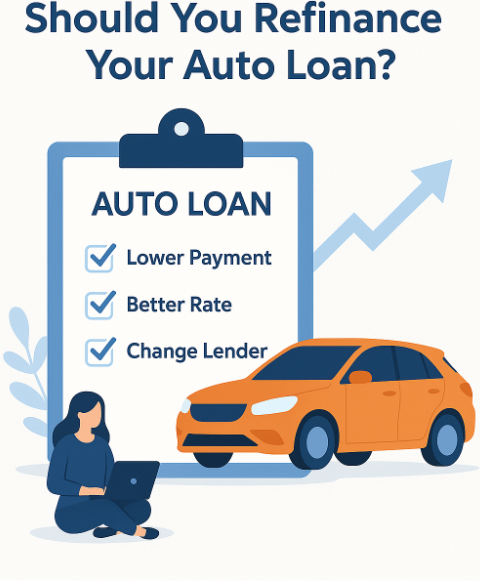
Infographic from Financial Middle Class explaining when refinancing an auto loan actually saves money.
When does refinancing your auto loan actually save you money? Financial Middle Class breaks it down.

A lot of middle-class households are driving around with car loans they quietly regret. Maybe you bought during the COVID price spike. Maybe the dealer “got you approved” at a rate you didn’t love because you were exhausted and just wanted to go home. Now rates have moved, your credit has changed, and you’re wondering: Should I refinance this thing?

Refinancing a car loan can help. In the second quarter of 2025, drivers who refinanced cut their interest rate by about 2 percentage points and lowered their monthly payments by an average of roughly $71, according to Experian data summarized by NerdWallet. That’s real money back into a middle-class budget each month. (Source: Experian via NerdWallet)

But refinancing is not magic. In the wrong situation, it just stretches your loan out, keeps you upside-down longer, and increases the total interest you pay. This article walks through how auto loan refinancing really works, when it makes sense, when it doesn’t, and how to run the numbers on your own loan.

What Does It Mean to Refinance an Auto Loan?

Refinancing your auto loan simply means taking out a new car loan to pay off your existing one. The new lender pays off the old loan; you start making payments on the new loan instead.

The new loan can have:

  • A different interest rate
  • A different term (number of months)
  • A different lender and payment due date

The point is to change the math so that your loan fits your life better. Most people refinance to:

  • Lower their interest rate and save money over the remaining term
  • Lower their monthly payment to ease cash flow, even if they pay more interest overall
  • Shorten the term so they can pay off the car faster and build equity
  • Remove a co-signer once their own credit profile improves

Refinancing is not free, though. There can be title fees, potential prepayment penalties on your existing loan, and the risk of extending your debt longer than necessary. So the question isn’t “Can I refinance?” but “Does refinancing this loan, right now, help my overall financial picture?”

Financial Middle Class logo

Financial Middle Class | Auto Refinance Savings Snapshot
Plug in your numbers to see if a refi could actually help.

Enter your current balance, rate, and remaining months, then the rate and term you’re being offered.


When Refinancing Your Auto Loan Makes Sense

Refinancing is most powerful when it solves a real problem: your interest rate is too high, your payment is choking your budget, or your original loan was just a bad deal.

1. Your interest rate has dropped or your credit has improved

If you took your original loan when rates were higher, or when your credit score was weaker, you may now qualify for a much better rate. Comparison sites and lenders report that many borrowers who refinanced in 2025 cut their rates by about 2 percentage points and saved around $71 a month on average. (Source: Experian via NerdWallet)

If your new rate is significantly lower than your current rate and you don’t drastically extend the term, a refi can cut interest costs over the life of the loan. (See guidance from USAA, Bank of America, and other lenders.)

2. You need payment relief to avoid bigger damage

With average car payments nudging $750–$800 a month for many buyers, a big auto loan can put real stress on a middle-class budget. Delinquencies among subprime borrowers have hit record highs as living costs and borrowing costs rise. (Source: Fitch data reported by Reuters)

If you’re dangerously close to missing payments, refinancing to a lower rate or slightly longer term can lower your payment enough to keep you current and avoid repossession. That can be worth paying some extra interest, especially if your alternative is wrecking your credit.

3. You want to shorten the term and pay the car off faster

Refinancing isn’t only about lower payments. If your income has grown, you might refinance into a shorter term at a similar or better rate. Your payment may go up a bit, but you:

  • Pay less total interest
  • Get out of debt faster
  • Build equity in the car more quickly

In a world where 69-month loans are now average and 84-month loans are becoming more common, (Source: industry data) deliberately moving back toward a shorter term is a quiet, powerful wealth move.

4. Your original loan was just bad

Dealers make a lot of money in the finance office. If you accepted a high rate just to get the car, or if there were add-ons rolled into the loan, refinancing with a bank or credit union can clean up a messy loan. Just make sure the new deal doesn’t hide similar games in the fine print.


When Refinancing Your Auto Loan Is a Bad Idea

1. Today’s rates are higher than your current rate

If current refinance rates are higher than the rate on your existing loan, refinancing rarely makes sense. Many lenders and AAA-type guides are blunt about this: if rates are up, stick with your lower rate unless you have an emergency reason to change the term. (Source: AAA auto refi guidance)

2. You’re almost finished paying off the car

If you’re down to the last 12–18 months of your loan, the interest portion of each payment is already small. Refinancing at that point can yield tiny interest savings while resetting the clock on your debt. You’re usually better off just finishing the current loan and enjoying a paid-off car.

3. You’re stretching the term way out

Refinancing from a 60-month loan into a 72- or 84-month loan may make the payment look prettier, but it often:

  • Boosts your total interest paid
  • Keeps you upside-down longer
  • Traps you in the car just when big repairs might start

In 2025, lenders report that 84-month loans are a growing slice of new originations, and that’s a red flag for affordability. (Source: creditor-side auto financing reports) If your “refi solution” is just a longer leash, be careful.

4. Your car is too old or too high-mileage

Many lenders won’t refinance cars above a certain age or mileage, or they’ll only do it at unattractive rates. If the car is near the end of its useful life, you also risk paying for a loan longer than the car reliably lasts.

5. You’re underwater and planning to trade in soon

If you owe more than the car is worth (you’re upside-down) and you plan to trade it in quickly, a refi might not help. In late 2024 and 2025, around a quarter of trade-ins were underwater, with average negative equity around $6,700–$7,000. (Sources: Edmunds and major news outlets)

In that situation, your best move might be to keep the car longer, make extra principal payments, and drive down the balance instead of resetting the loan again.


How to Refinance Your Auto Loan the Right Way

Refinancing doesn’t have to be complicated. Most lenders boil it down to a few steps: (Source: TransUnion, major banks and credit unions)

  1. Gather your current loan info. Balance, rate, term, monthly payment, and whether there’s a prepayment penalty.
  2. Know your credit profile. Check your credit score and report, fix any errors, and get a realistic sense of what rate range you qualify for.
  3. Estimate your car’s value. Use sites like Kelley Blue Book or Edmunds to get a ballpark. Lenders care about the loan-to-value ratio (LTV).
  4. Shop around. Compare offers from credit unions, banks, and online lenders—not just the first one you see. Many let you pre-qualify with a soft credit check.
  5. Compare the total cost. Use a calculator like the one above: look at monthly payment and total interest, not just the payment.
  6. Read the fine print and close. Check for fees, add-ons, and the length of the term. If the numbers still make sense, complete the refi and confirm the old loan is paid off.

Financial Middle Class logo

Financial Middle Class | Refi Readiness Checklist
Quick test before you sign anything.
  • My new interest rate is at least 1–2 percentage points lower than my current rate.
  • I am not extending the loan so far that I’ll be paying for this car deep into its high-mileage years.
  • The new payment fits my budget without cutting retirement contributions or emergency fund deposits to zero.
  • I’ve checked for prepayment penalties or fees on my current loan and factored them into the math.
  • I’ve compared offers from at least two different lenders.
  • If I’m underwater, my plan is to keep the car and pay it down, not roll more negative equity into the next car.

FAQ: Auto Loan Refinancing, Answered

When does it make sense to refinance an auto loan?

It usually makes sense when you can cut your rate, lower your payment, or shorten your term without wrecking the rest of your budget. Use the calculator on this page to compare total interest in both scenarios, not just monthly payments.

When should I avoid refinancing?

Skip it when rates are higher than what you already have, when you’re close to the end of the loan, or when the only way to “save” is to stretch your term so far that you end up paying more interest overall.

Will refinancing hurt my credit?

Expect a small, temporary dip from the hard inquiry and the account changes. If you keep paying on time, your score can recover and even improve over time.

How soon can I refinance?

Some lenders will consider a refi within a few months of purchase once the title is settled. Others suggest waiting six to twelve months so you have more payment history and, ideally, a better credit profile.

Do I have to refinance with the same lender?

No. In fact, many borrowers get better deals by refinancing through a bank or credit union other than the original lender. Your current lender might make an offer to keep your business—compare everything before saying yes.


The Bottom Line: Don’t Refinance Just Because You Can

Refinancing your auto loan can be a smart middle-class move—or just another way to stay in car debt longer.

Use refinancing to:

  • Cut a too-high rate
  • Protect your budget from a suffocating payment
  • Shorten your loan and build equity faster

Don’t use refinancing to:

  • Just kick the can down the road
  • Hide the real cost of a car you couldn’t afford in the first place
  • Roll more negative equity into the next shiny thing on the lot

Run your numbers, set your own rules, and make sure your next move with your auto loan actually serves your bigger goals: less stress, more savings, and more options.

If Your Rate Is Too High, Don’t Just Live With It

Use the Auto Refinance Savings Snapshot above to compare your current loan with the offer you’re seeing. If the new deal doesn’t clearly cut your interest or protect your budget, keep shopping. A few hours of effort now can save you hundreds or thousands over the next few years.

Want more middle-class money breakdowns like this? Join the Financial Middle Class newsletter for real talk on cars, credit, housing, and everything in between.


Get the Newsletter

BACK TO TOP
Continue Reading
Click to comment

Leave Comment

American Middle Class / Dec 03, 2025

Should You Refinance Your Auto Loan?

Paying too much for your car? Learn when refinancing your auto loan saves money and...

American Middle Class / Dec 03, 2025

How to Avoid Being Upside-Down on a Car Loan

Worried you owe more than your car is worth? Learn how to avoid an upside-down...

American Middle Class / Dec 03, 2025

The Real Cost of Your Car: Why That “Affordable” Payment Is Wrecking Middle-Class Budgets

Think you just have a car payment? Learn your true total car cost and how...