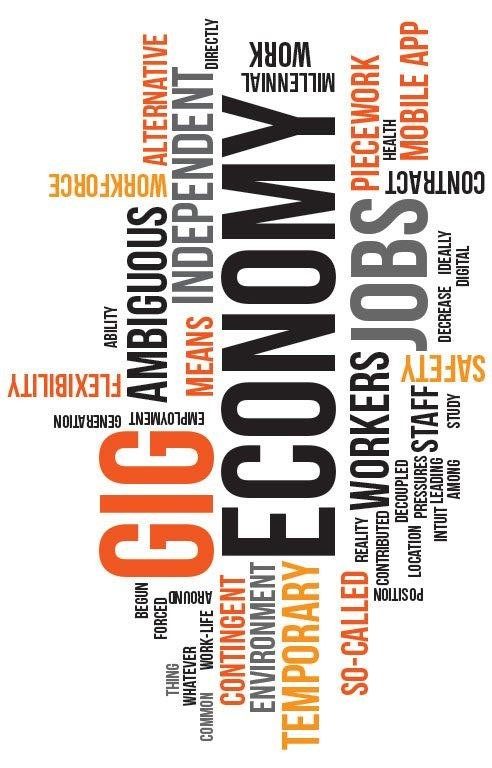
- Unlike traditional corporations that value those who work for them as human resources, the gig economy has humans who serve as middlemen between them and their clients.
- The gig economy, which consists of a collection of applications aka the “App,” does not consider those who work for them as employees. Established companies like Uber, Lyft, Task Rabbit, Airbnb, and Turo classify their employees as independent contractors.
- The moderate-income individuals, who work for the ” App,” cannot make their way up to the middle class even if they work 80 hours a week.
- The gig economy focuses on dynamic scheduling, irregular hours, and unsteady workloads. Although working full-time hours, the gig economy’s employees are part of the permanent underclass. They depend on food stamps, Medicaid, and subsidized housing to survive.
Everybody seems to have a gig economy job these days, but they provide none of the employee benefits that often help employees move up and stay in the middle class. The gig economy, which consists of a collection of applications aka the “App,” does not consider or see those who work for them as employees. Established companies like Uber, Lyft, Task Rabbit, Airbnb, Turo, and many more classify their employees as independent contractors.
Unlike traditional corporations that often value those who work for them as human resources, the gig economy has humans who serve as middlemen between them and their clients. Because the gig economy does not consider those with gig economy jobs part of their resources, they are less protective of them. The working-class individuals, who work in the gig economy full-time, have no healthcare, paid holidays, vacations, sick time off, or any other standard employee benefits. They don’t get any benefits, nor do they make a living wage.
Those with gig economy jobs cannot make their way up to the middle class even if they work 80 hours a week. Many of them work for more than one gig jobs, but they still can’t make ends meet. The benefits and resources such as healthcare, sick leave, career development, and 401 (k) often provided by traditional corporations substitute for dynamic scheduling, irregular hours, and unsteady workloads.
The gig economy does not believe that the working-class individuals, who serve their clients, are human resources. They don’t protect them and provide them with an option to move up to the next socioeconomic rung. However, Uber, Lyft, and Amazon recognize that those who work for them are humans–not robots. It’s progress considering are little they value them.


Pingback: America Is Still a Middle-Class Country - FMC
Pingback: The Fight for 15 Is Our Fight Too - FMC Politics - %
Pingback: 5 WAYS TO SAVE MONEY IF YOU ARE BROKE - FMC
Pingback: Debt You Can't Discharge Through Bankruptcy - Personal Finance FMC
Pingback: Uber and Lyft Can Keep Taking Advantage of Their Rideshare Drivers, for Now - Gig Economy
Pingback: What Matters to Middle-Class Voters - FMC