
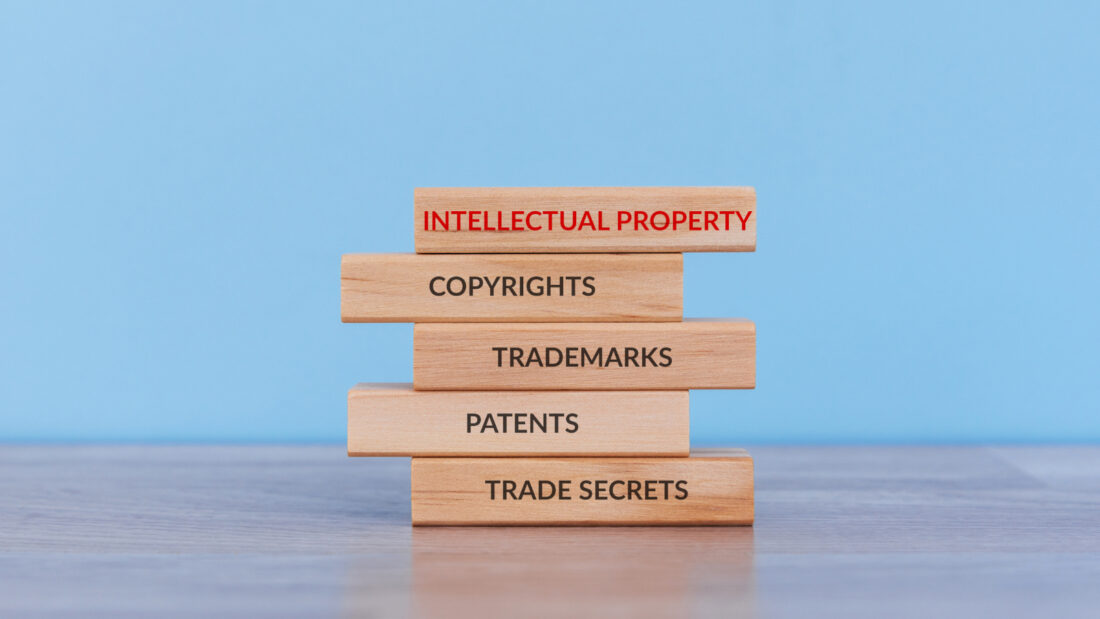
Trademarks, Patents, and Copyrights
By Article Posted by Staff Contributor
The estimated reading time for this post is 410 seconds
Introduction
Intellectual property rights (IPRs) such as trademarks, patents, and copyrights protect a company’s intellectual assets.
These IPRs play a significant role in safeguarding the unique products or services that businesses offer to their clients. Numerous studies and meta-analyses have documented intellectual property’s profound positive effect on companies’ bottom lines. The Oracle of Omaha, Warren Buffett, believes that IP provides businesses a wide economic moat or competitive advantage.
This article will comprehensively analyze trademarks, patents, and copyrights.
Trademark
A trademark is a sign, design, symbol, or expression used to distinguish the goods or services of one company from another.
Trademarks are registered to protect the owner’s exclusive rights over their mark. This exclusive right protects the owner against other companies or individuals trying to use their trademark without permission.
All intellectual property, including trademarks, can be registered with the United States Patent and Trademark Office (USPTO) and provide exclusive rights to use the trademark in connection with the specific goods or services it is registered for. Trademarks can be renewed indefinitely as long as the mark remains in use.
According to a meta-analysis of existing literature, trademarks are essential to companies because they establish brand identity and help to differentiate their products from competitors. Additionally, trademarks serve as a valuable marketing tool that helps companies to build customer loyalty and trust.
Patent
A patent is a legal document that gives the holder the exclusive right to manufacture, use, and sell an invention for a set period, typically 20 years from the filing date.
Patents are granted to protect the intellectual property rights of inventors and innovators. A meta-analysis of existing literature on patents shows that patents provide the necessary legal protection to the holder, ensuring that no one else can produce, use, or sell the invention without the owner’s consent.
Patents are used to protect inventions or discoveries. There are three types of patents: utility, design, and plant.
Utility patents are the most common and are granted for new and useful processes, machines, articles of manufacture, or compositions of matter.
Design patents are granted for new, original, and ornamental designs for an article of manufacture.
Plant patents are granted for new and distinct varieties of plants that have been asexually reproduced.
Patents also encourage innovation by giving inventors a financial incentive to develop new ideas and bring them to market. By preventing others from copying their inventions, inventors are more likely to invest in research and development.
Patent protection provides exclusive rights to make, use, and sell the invention for 20 years from the filing date.
However, patent protection is limited to the country it is granted. After the patent expires, the invention enters the public domain and can be used by anyone.
Copyright
Copyrights protect original works of authorship, such as books, music, software, and movies. Copyright protection provides exclusive rights to reproduce, distribute, perform, display, and create derivative works based on the original.
Copyright protection is automatic upon creation of the work and does not require registration with the US Copyright Office.
However, registration is recommended because it provides additional benefits, such as the ability to sue for infringement and the potential for statutory damages.
Copyright protects the expression of an idea but not the idea itself. Copyrights give creators the exclusive right to use, copy, distribute, and display their work, ensuring they receive financial compensation. According to a meta-analysis of existing literature on copyrights, they are crucial to protect the creative work of artists, authors, and musicians.
Copyrights also protect the moral rights of creators, including the right to be credited for their work and to prevent any unauthorized changes or distortions to their original position.
Meta-Analysis Findings on IPs
The meta-analysis of existing literature on trademarks, patents, and copyrights reveals that these intellectual property rights are essential for companies and individuals to protect their intellectual assets.
They provide a legal framework to prevent unauthorized use of trademarks, patents, and copyrights, ensuring that creators and innovators receive due compensation for their work.
Moreover, these IPRs encourage innovation and creativity by providing financial incentives to inventors and creators, ultimately leading to the development of new and improved products or services.
Trademarks, Patents, and Copyrights Litigation
One study examined patent litigation in the United States over 20 years, from 1983 to 2002. The study found that patent litigation increased dramatically during this period, with the number of cases filed yearly rising from 370 in 1983 to 1,872 in 2002.
The study also found that electronics, computers, and communications were the most litigated technology areas.
Another meta-analysis examined the impact of copyright protection on innovation in the software industry. The study found that copyright protection positively affected creation, as measured by the number of new products introduced and the number of patents filed.
What Happens to Companies that Infringe on Other Companies’ Intellectual Property
First, let’s define what constitutes IP infringement. IP infringement occurs when one company uses another company’s intellectual property without permission or authorization.
This can include copying a patented invention, using a copyrighted work without permission, or using a trademarked logo or brand name without authorization.
When a company is found to have infringed on another company’s IP, there can be legal and financial repercussions. Depending on the severity of the infringement and the type of intellectual property involved, the consequences can range from a simple cease-and-desist letter to a costly lawsuit and even criminal charges.
One of the most egregious cases of IP infringement in recent years was the dispute between Apple and Samsung.
In 2011, Apple filed a lawsuit against Samsung, alleging that Samsung’s smartphones and tablets copied the design of Apple’s iPhone and iPad.
The lawsuit resulted in a legal battle that lasted for several years and ultimately resulted in Samsung being ordered to pay Apple $539 million in damages for infringing on Apple’s patents.
Another high-profile case involved the sportswear company Nike and the fashion company Skechers.
In 2016, Nike filed a lawsuit against Skechers, alleging that Skechers had copied the design of its Flyknit shoe. The lawsuit resulted in Skechers agreeing to pay Nike $75 million to settle the case.
In addition to legal and financial consequences, companies that infringe on other companies’ intellectual property can also damage their reputation and brand image.
This can have long-term consequences beyond just the immediate financial impact of a lawsuit or settlement.
For example, the pharmaceutical company Purdue Pharma faced widespread criticism and condemnation after it was revealed that the company had misled doctors and patients about the addictive nature of its opioid painkiller, OxyContin.
Purdue Pharma was later found to have infringed on the patent for a competing painkiller made by Endo Pharmaceuticals and was ordered to pay Endo $700 million in damages.
However, the damage to Purdue Pharma’s reputation and brand image had already been done, and the company ultimately filed for bankruptcy in 2019.
Another example of the long-term consequences of IP infringement can be seen in the case of the ride-sharing company Uber.
In 2017, it was revealed that Uber had been using technology developed by Waymo, the self-driving car division of Google’s parent company, Alphabet, without permission.
Waymo filed a lawsuit against Uber, which was eventually settled for $245 million. However, the damage to Uber’s reputation as a company that prioritizes innovation and technology was significant, and the company has struggled to overcome this perception in the years since.
Conclusion
In conclusion, trademarks, patents, and copyrights are all primary forms of intellectual property protection that provide legal rights to creators and owners of original works.
Each form of protection has unique benefits and limitations. They play a vital role in protecting the intellectual assets of businesses and individuals. The decision to pursue one form of security over another depends on the specific circumstances of the intellectual property.
A meta-analysis of existing literature on these IPRs reveals that they provide legal protection to their holders, prevent unauthorized use, and encourage innovation and creativity.
The consequences of infringing on another company’s intellectual property can be severe, including legal and financial penalties, damage to reputation and brand image, and long-term business implications.
Companies and individuals must understand the importance of these intellectual property rights and take the necessary steps to protect their intellectual assets.


RELATED ARTICLES
The S&P 7,000: How Wall Street Disconnects from Main Street
S&P 7,000 can rise while wages, benefits, and towns fall behind. See why the market isn’t the economy—read now.
The Affordability Pivot: Can Trump’s New Promises Actually Lower the Middle-Class Bill?
Will Trump’s affordability proposals lower your bills—or backfire? Housing, rates, tariffs, gas, credit cards—explained. Read now.
Leave Comment
Cancel reply
Gig Economy
American Middle Class / Feb 18, 2026
How Wealth Is Passed Across Generations in the United States: Mechanisms, Evidence, and the Policy Debate
How wealth passes between generations—trusts, taxes, and the debate. Get the facts, figures, and tradeoffs. Read now.
By FMC Editorial Team
American Middle Class / Feb 16, 2026
The S&P 7,000: How Wall Street Disconnects from Main Street
S&P 7,000 can rise while wages, benefits, and towns fall behind. See why the market isn’t the economy—read now.
By MacKenzy Pierre
American Middle Class / Feb 16, 2026
The “Resilient Consumer” Is Real—But So Is the Interest Bill
Credit card balances are rising as savings fall. See what it means—and the 30/60/90 plan to escape 25% APR debt.
By Article Posted by Staff Contributor
American Middle Class / Feb 09, 2026
What To Do If You Get Fired With an Outstanding 401(k) Loan
Fired with a 401(k) loan? Avoid taxes, offsets, and deadline traps with this step-by-step checklist. Read now.
By Article Posted by Staff Contributor
American Middle Class / Feb 09, 2026
The Real Math of Money in Relationships
Split finances without resentment. Any couple, any income ratio. Use the worksheet + rules—start today.
By Article Posted by Staff Contributor
American Middle Class / Feb 03, 2026
Investing or Paying Off the House?
Invest or pay off your mortgage? See a $500k example with today’s rates, dividends, and peace-of-mind math—then choose your plan.
By Article Posted by Staff Contributor
American Middle Class / Jan 30, 2026
Gold, Silver, or Bitcoin? Start With the Job—Not the Hype
Gold, silver or Bitcoin? Learn what each is for—and how to size it—before you buy. Read the framework.
By Article Posted by Staff Contributor
American Middle Class / Jan 29, 2026
Florida Homeowners Pay the Most in HOA Fees
Florida HOA fees are surging. See what lawmakers changed, what’s next, and how to protect your budget—read before you buy.
By Article Posted by Staff Contributor
American Middle Class / Jan 29, 2026
Why So Many Homebuyers Are Backing Out of Deals in 2026
Why buyers are backing out of home deals in 2026—and how to avoid costly surprises. Read the playbook before you buy.
By Article Posted by Staff Contributor
American Middle Class / Jan 28, 2026
How Money Habits Form—and Why “Self-Control” Is the Wrong Villain
Learn how money habits form—and how to rewire spending and saving using behavioral science. Read the framework and start today.
By FMC Editorial Team
Latest Reviews
American Middle Class / Feb 18, 2026
How Wealth Is Passed Across Generations in the United States: Mechanisms, Evidence, and the Policy Debate
How wealth passes between generations—trusts, taxes, and the debate. Get the facts, figures, and tradeoffs....
American Middle Class / Feb 16, 2026
The S&P 7,000: How Wall Street Disconnects from Main Street
S&P 7,000 can rise while wages, benefits, and towns fall behind. See why the market...
American Middle Class / Feb 16, 2026
The “Resilient Consumer” Is Real—But So Is the Interest Bill
Credit card balances are rising as savings fall. See what it means—and the 30/60/90 plan...