America’s Evolving Work Tapestry: Stability Amidst Shifting Sands
In the intricate tapestry of the American economy, there’s a distinct evolution from the established norms we once took for granted.
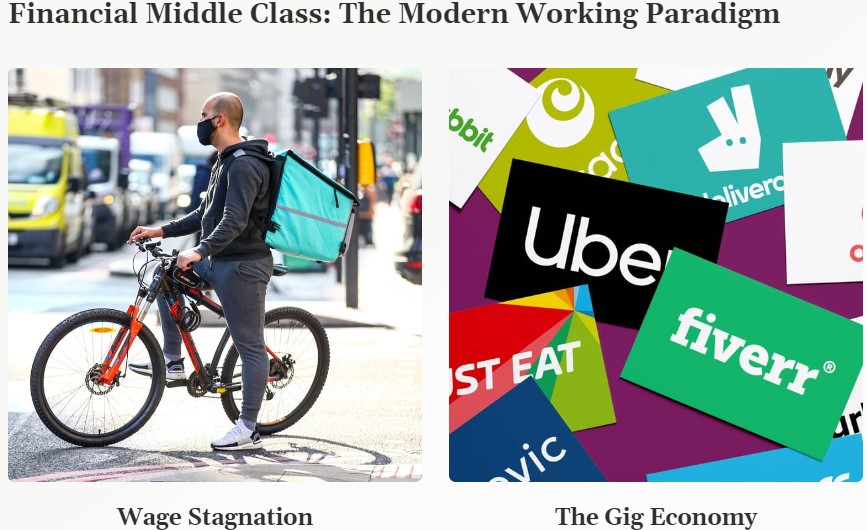
A ballooning fraction of our workforce now confronts a future drenched in ambiguity. The encroaching norm of inconsistent employment schedules, the burgeoning ‘instant economy’, and an escalation in part-time and gig-based roles have relegated millions to an endless quest for work, rather than securing consistent livelihoods.
For many, the once cherished standard of occupational stability feels increasingly elusive, overshadowed by the specters of outsourcing, unmoving wage rates, and weakened worker unions.
Embracing Uncertainty: The Modern Working Paradigm
Lauded by some as the dawn of a new work era, the on-demand economy indeed promises flexibility. However, it often exacts a toll in the form of unpredictability.
Consider services like rideshares or delivery platforms; they offer monetary incentives but with a catch. The ebb and flow nature of such jobs, driven by unpredictable consumer demands, renders stability elusive.
The increasingly common practice of dynamic scheduling only amplifies this volatility. While it may appeal to business logic, it’s a source of palpable anxiety for those kept guessing about their next shift.
Wages in Limbo: The Subtle Crisis
In tandem with job instability, the stagnant nature of wages further strains the American workforce. The real value of the average American’s earnings has plateaued, even as living costs surge relentlessly.
The implications of this wage paralysis are profound:
- Consumer Spending: Wages are the backbone of consumer expenditure. When they stagnate, it trickles down, adversely affecting the entire economic ecosystem, especially smaller businesses reliant on local clientele.
- Eroding Mobility: At its heart, the American ethos rests on upward mobility. Unmoving wages can stall this journey, inhibiting educational pursuits, entrepreneurial aspirations, and overall quality of life enhancement.
- Debt Spiral: Faced with outpacing expenses, credit becomes the seductive bridge for many, ensnaring households in an unrelenting debt cycle.
This wage crisis is not merely a pocketbook issue; it’s a reflection of broader societal tensions encompassing fairness, equity, and the very tenets that underpin the American dream.
The Global Reach: Outsourcing and its Reverberations
The term “outsourcing” might evoke images of offshored factories, but its implications ripple across various professional echelons.
Accompanying this shift, we’ve witnessed the decline of traditional manufacturing centers, supplanted by service jobs that often come up short in benefits and longevity.
Debt’s Dark Underbelly:
The Predatory Menace The widening gap between dreams and incomes sees many turning to loans. Yet, this space has been opportunistically occupied by predatory lenders, offering tantalizing short-term solutions that plunge many deeper into financial quagmires.
Education and Stability: The Twin Pillars
The quality of education, or lack thereof, is a pressing concern. As the linchpin of socio-economic advancement, sub-par schooling perpetuates cycles of diminished prospects. Coupled with this, the lack of basic benefits like sick leave further frays the safety net for numerous households.
Navigating Tomorrow: Towards a Renewed Vision
The challenges might seem multitudinous, but they are not intractable. A fusion of policy overhauls, corporate conscientiousness, and grassroots activism can redraw our economic contours.
Valuing each worker, transcending job titles or employment modes, stands as an imperative starting point. America’s economic story is a dynamic one. Ensuring that its unfolding chapters benefit its entire populace is a shared quest that beckons us all.