
How Credit Card Rewards Can Mislead You (and How to Beat the Traps)
The estimated reading time for this post is 218 seconds
The illusion (why “free points” aren’t free)
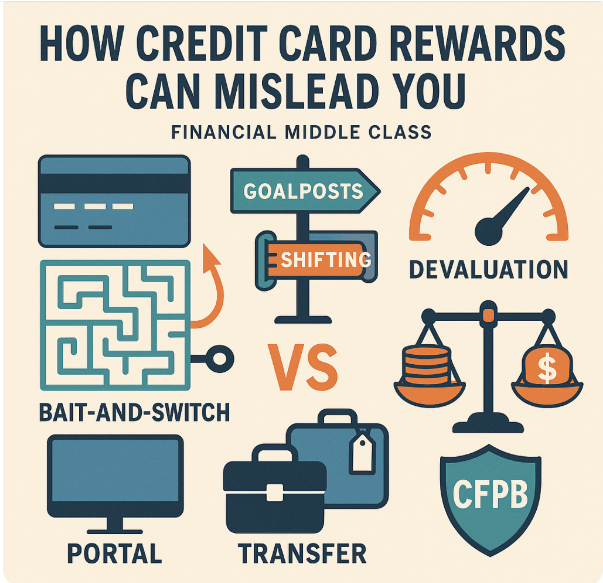
Rewards feel like free money. In reality, red tape, devaluations, and “earn-more-to-save-more” nudges push you to overspend for perks that move under your feet. In 2024 the CFPB flagged four recurring pain points—hidden conditions, devaluations, redemption problems, and revocations—and warned issuers that these practices can be illegal.
Where people get tripped up
1) Promo vs. reality
Splashy offers hide fine print: extra spend windows, specific merchant codes, blackout categories, or “new customer” exclusions. The CFPB documented complaints where promo terms didn’t match the marketing and redemptions were blocked or clawed back. Keep receipts and screenshots.
2) Devaluation drift
Award charts morph or go fully dynamic. Over time you need more points for the same trip—one analysis pegs award-price inflation at ~36% since 2019, outpacing overall inflation. That’s a stealth tax on your balance.
3) Inflation squeeze
When airfare/hotel prices rise, your fixed credits and category caps don’t stretch as far. Industry data shows airfare rising again in mid-2025 after a flat start to the year. Even if CPI cools for a month, travel categories can buck the trend.
4) Portal vs. transfer math
Issuer portals can look generous—but “boosted” values don’t always beat transfers (or cash). Chase states its portal values explicitly (1.25–1.5¢/point, depending on card), yet third-party valuations vary by partner; e.g., transferring to some hotel programs can yield <1¢ per point. Always sanity-check before you click.
5) Access rules that quietly change outcomes
Even when you earn the perks, using them gets harder: lounge visits are capped and subject to time limits (e.g., Delta Sky Club introduced visit-count systems for Amex/Delta premium cards beginning 2025). If the “experience” gets crowded or capped, your practical value drops.
Signs you’re being nudged—not rewarded
- You’re chasing spend to unlock credits you’d never buy with cash.
- Your redemptions feel worse year over year despite “more points.”
- You’re loyal to one opaque program that changes rules often.
How to protect yourself (3 steps that actually work)
1) Put a conservative price on points—then haircut 10–20%
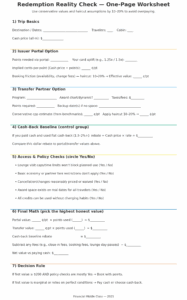
Start with an external benchmark (portal floor or reputable third-party valuations), then reduce it to reflect friction and limited seat availability. Example: If you value UR at 1.5¢ via portal on a Reserve card, treat it as 1.3–1.35¢ when planning, so you’re not surprised later.
2) Prefer cash-like rewards for everyday spend (unless you travel a lot)
If you don’t routinely redeem for high-value trips within 12 months, flat cash-back often beats aspirational points—especially during dynamic-pricing surges.
3) Diversify and redeem regularly
Don’t hoard. Spread balances across 1–2 flexible currencies and book within a year. This limits exposure to program devaluations and policy changes. (Recent CFPB guidance explicitly calls out devaluing earned rewards as a potential UDAAP.)
Mini case studies (what the math looks like)
- Portal “boost” vs. transfer: A $600 flight costs 40,000 UR via the Reserve portal at 1.5¢/pt (good, transparent). Transferring those 40k to a hotel partner worth 0.8¢ each would net $320 in value—worse than the portal. Pick the path that wins for the specific trip.
- Policy friction example: You planned 10 lounge visits, but your card’s visit allotment caps you at 6 unless you hit a spend target. If local day-passes average $40–$50, your lost value is $160–$200—often enough to flip a borderline annual-fee decision.
- Devaluation drag: Your 2019-era 60k-mile transcon in business now prices at ~80–90k on many dates under dynamic systems. At 1.5¢ target value, you’d need $1,200–$1,350 of flight value to “break even” on the points—harder to find.
Enforcement and your rights (use this when things go sideways)
The CFPB warned that devaluing earned rewards, burying conditions, blocking redemptions, or revoking rewards can violate consumer-protection law (UDAAP). If an earned reward is denied or devalued after you earned it:
- Document everything (screenshots, statements, chat logs).
- Escalate in writing with dates and terms quoted.
- File a CFPB complaint—it’s fast and creates a paper trail regulators see.
Related Reads:
- Luxury Credit Cards in 2025: What’s Behind the Rising Fees?
- Why Annual Fees Keep Going Up (and What You Get in Return)
Bottom line
Rewards are tools, not trophies. If a card makes you spend more to “win,” you’re the product. Price your points conservatively, prefer cash when you’re not traveling, diversify, and redeem often.