
Trending Now :

Auto Loan Calculator PMI Exit Plan: How to Remove PMI Faster and Reclaim Cash Flow The Double-Debt Trap After Cash-Out: Why Card Balances Creep Back Charitable Giving That Actually Helps (and Helps Your Taxes) Kid Magic on a Budget: Memory-First Traditions: Low-cost rituals that outlast the plastic toys forgotten by February Balancing Emotions and Money When the Holidays Hit Hard New IRS Retirement Limits for 2026: Will You Actually Use Them? Behind on Your Mortgage? A Step-by-Step Guide to the Foreclosure Process It’s Not About How Much You Make — It’s How Much You Keep Portable Mortgages: Why the Middle Class Should Be Able to Take Their 3% Rate With Them Does Retiring the U.S. Penny Nudge America Further into a Cashless Future? From FDR’s 30-Year Breakthrough to Trump’s 50-Year Pitch: Is This Still About Homeownership — or Just Smaller Payments? Racial gaps in retirement plans leave Black, Hispanic workers with fewer benefits FICO Says Scores Are Slipping to 715 — Here’s What’s Actually Driving It (and How to Stay Out of the Downward Group) Why So Many Middle-Class (and Upper-Middle-Class) Households Can’t Stick to a Budget Reverse Mortgages for Middle-Class Families: Relief, or Just Eating the Inheritance? The One-Gift Rule: How to Stop Holiday Gift Inflation Without Looking Cheap Office gifting + Secret Santa: what’s actually fair Understand Financial Stressors — and Know How to Cope with Them Federal or private student loans? Here’s what the difference is. Your Complete Guide to FAFSA for the 2026–27 School Year Government Shutdown Leaves Millions Unpaid. Here’s How Banks Are Helping (Right Now) Annual Reminder: Review Your Beneficiaries (The 15-Minute Wealth Check) A Plan to Grow Your FICO® Score (Without the Gimmicks) Food Inflation vs. Holiday Menus: Feast Without the Financial Hangover How Much Do the Holidays Cost Middle-Class Americans? Points, Buy-Downs, and Breakeven: Stop Lighting Money on Fire Mortgage Recast: The Low-Cost Way to Shrink Your Payment Without Refinancing 🏠 The House That Built (and Broke) the Middle Class: How Much Home Should Americans Really Buy Property Tax Shock: How to Appeal Your Assessment (and Actually Win) The Equity Mirage: Why a $17.5 Trillion Cushion Doesn’t Mean You Should Strip Your House for Cash The Top 15 States Seeing the Biggest Equity Gains—Then vs. Now From Payday Loans to Junk Fees: Why Predatory Finance Targets the Middle Class Safe Bank Accounts: What They Are and How to Get One Switching Banks Made Simple: A Middle-Class Guide to Beating Junk Fees How Other Countries Protect Consumers: What the U.S. Can Learn from Abroad Why Annual Fees Keep Going Up (and What You Get in Return) Luxury Credit Cards in 2025: What’s Behind the Rising Fees? Why the American Middle Class Is Watching the Credit Card Battle from the Sidelines Middle-Class Money: Choosing Value Over Vanity Life Insurance Explained: Choosing the Right Policy for Your Family’s Financial Security How Millennials Can Still Buy a Home in 2025 — Even as the American Dream Shrinks Financial Literacy in America: Why 73% of Adults Struggle with Basic Money Questions Zelle Scams and Real-Time Payments: What You Need to Know Before You Send Money The Hidden Cost of Overdraft: Why Middle-Class Americans Still Pay Billions Are Big Banks Designed Against You? The Asymmetrical Relationship Between Middle-Class Americans and the Largest U.S. Banks Zero-Based Budgeting for Families: Planning Beyond Today Life Insurance and Debt: How to Protect Your Family Estate Planning for Millennials: Why It’s Not Just for the Elderly How to Minimize Debt Later in Life Your Dream Doesn’t Have to Bankrupt You: Why Affordable Dreams Matter for the Middle Class Credit Card Scores: Why Bankcard Models Matter More Than You Think 20 Colleges with Strong “Bang-for-Your-Tuition-Buck Alternative Credit: How Borrowers Without Traditional Credit Histories Can Still Qualify for Loans Commerce Secretary Howard Lutnick Worries about the Wrong GDP Financial Nihilism: How Millennials and Gen Z Are Betting Against Economic Reality The Nouveau Riche and the U.S. Tax Code: A Tale of Unequal Burdens 10 Ways to Retire Comfortably Even if You are Not a 401(k) Millionaire The Federal Reserve’s Rate Cut: What It Means for Your Finances and Why It’s Time to Act Now Dark Web Monitor Alert: Are You Safe from Identity Theft? Where to Find $20 Million Homes in the U.S.: The Ultimate Guide to Luxury Real Estate The COVID EIDL Loan Challenge: Small Businesses’ Struggles in a Post-Pandemic Economy Biggest Financial Crimes: Salomon Smith Barney Kamala Harris’s Ambitious Plan to Lower Housing Costs: A Comprehensive Look What Credit Card Users Should Know if the Fed Cuts Rates in September Taxing Unrealized Gains: A Political Pipe Dream with No Real Payoff Best Cars for Middle-Class Americans How to Finance an Engagement Ring The Risks and Rewards of Keeping a Mortgage After 65 Credit Score Breakdown: FICO and Vantage Scores In Search of the Next Asset Bubble Biggest Financial Crimes: Washington Mutual Financial Scandal Re-Drafting the 2023 IPO Class The Interest-Free Installments Economy FICO Scoring Models: Explained Fed Holds Off on Rate Hike Rise of the Global Middle Class: Opportunities and Challenges Protect Yourself from Financial Scams Money Motivators Mortgage Rate Buydown What Does the Hot Inflation Report Mean for the Housing Market How Do You Build Wealth: Invest in Yourself Times Up for Programmed Money Biggest Financial Crimes: Countrywide Quantitative Tightening, Inflation, & More The Stock Market Is On Sale Investors Need to Netflix and Chill Credit Card Fixed-Interest Loans: Explained Are You Money Smart? Build Your Credit for Free Filing Your Taxes in 2022 Credit Cards that Offer 2% Cashback on All Purchases Navient Ordered to Cancel Student Loans U.S. Mortgage Interest Rates Soaring Two Big Banks Cut Overdraft Fees 2022 IPO DRAFT CLASS: Ranking the Top 10 Prospects Re-Drafting the 2021 IPO Draft All You Need to Know about Buy Now Pay Later companies Credit Card Sign-Up Bonus or SUB The Best Credit Card for the Middle-Class Make An All-cash Offer with No Cash Capitalism Always Ignores Politics All You Need to Know about the Financial crisis of 2007-2008 American Families Face Serious Rent Burden Savings Is An Expense You Can’t Build Generational Wealth If You Are Broke IT’S OFFICIAL: Robinhood is a Meme Stock All You Need to Know About Biden Mortgage Modifications & Payment Reductions Apple Card 2nd Year Anniversary: Should You Get It Now Wells Fargo to Pull Customers Personal Lines of Credit The Rise of Individual Investors The US Housing Market Is Booming. Is a Crash Ahead? Financial Literacy: How to Be Smart with Your Money Non-Fungible Token (NFT):EXPLAINED SKYROCKETED CEO PAY & LONG LINES AT FOOD BANKS Amazon Workers Want to Unionize Another Major City Piloted Universal Basic Income The New Bubble: SPACs SUBMIT YOUR PPP ROUND 2 APPLICATION BEFORE MARCH 31ST Robinhood-GameStop Hearing & Payment for Order Flow Guess Who’s Coming to Main Street Democratic Senators Say No to $15 Minimum Wage BEZOS OUT! President Biden Most Impressive Act Went Unnoticed: CFPB Biden $1.9 Trillion Stimulus Package 2021 IPO DRAFT CLASS: Ranking the Top 10 Prospects $25 Billion Emergency Rental Assistance NO, TESLA IS NOT WORTH MORE THAN TOYOTA, VOLKSWAGEN, HYUNDAI, GM, AND FORD PUT TOGETHER AMAZON TO HAND OUT ITS WORKERS $300 HOLIDAY BONUS Where Does the American Middle-class stand on Student Debt Relief? Joe Biden’s Economic Plan Explained 4 TYPES OF BAD CREDIT REPORTS AND HOW TO FIX THEM What Is the Proper Approach to Not Buy Too Much House? FISCAL STIMULUS PLANS STILL IN ACTION How to Pick Investments for Your 401(k) 10 Simple Ways to Manage Your Money Better All You Need to Know about Reverse Mortgage All You Need to Know about Wholesale Real Estate Credit card Teaser Rates AVERAGE CREDIT CARD INTEREST RATE SURGES TO 20.5 Percent Trump Signs 4 Executive Orders for Coronavirus Economic Relief The Worst American Economy in History WHY CREDIT CARDS MINIMUM PAYMENTS ARE SO LOW? 10 BIGGEST COMPANIES IN AMERICA AND WHO OWNS THEM White House Wants to End the Extra $600-A-Week Unemployment  10 Countries That Penalize Savers FEWER CREDIT CARD BALANCE-TRANSFER OFFERS ARE IN YOUR MAILBOX Private Payrolls and the Unemployment Rate SHOULD YOU BUY INTO THE HOUSING MARKET RESILIENCY? WILL WE GET A SECOND STIMULUS CHECK The Child Tax Credit and Earned Income Tax Credit THE RETURN OF BUSINESS CYCLES Should You Request a Participant Loan or an Early 401(k) Withdrawal? Homebuyers Should Not Worry about Strict Mortgage Borrowing Standards The Potential Unintended Consequences of Mortgage Forbearance All Business Owners Need to Know about the Paycheck Protection Program 10 MILLION UNEMPLOYMENT CLAIMS IN TWO WEEKS HOW WILL THE GLOBAL MIDDLE-CLASS RECOVER FROM A SECOND ECONOMIC RECESSION IN A DECADE? WILL U.S. CONSUMERS CONTINUE TO SPEND? HOW’S YOUR 401(k) PRESIDENT TRUMP SIGNS $2.2 TRILLION CORONAVIRUS STIMULUS BILL MIDDLE-CLASS NIGHTMARE: MORE THAN 3.3 AMERICAN FILED FOR UNEMPLOYMENT CLAIMS IN THE US LAST WEEK. LAWMAKERS AGREED ON $2 TRILLION CORONAVIRUS STIMULUS DEAL CORONAVIRUS STIMULUS PACKAGE FAILED AGAIN IN THE SENATE APRIL 15 (TAX DAY) DELAYED DEMOCRATS AND REPUBLICANS DIFFER ON HOW $2 TRILLION OF YOUR TAX MONEY SHOULD BE SPENT YOU CAN DELAY MORTGAGE PAYMENTS UP TO 1 YEAR, BUT SHOULD YOU? 110 Million American Consumers Could See Their Credit Scores Change The Middle-Class Needs to Support Elizabeth Warren’s Bankruptcy Plan The SECURE Act & Stretch IRA: 5 Key Retirement Changes 5 Best Blue-chip Dividend Stocks for 2020 9 Common Bankruptcy Myths 401(K) BLUNDERS TO AVOID Government Policies Built and Destroyed America’s Middle-Class & JCPenney Elijah E. Cummings, Esteemed Democrat Who Led the Impeachment Inquiry into Trump, Dies at 68 12 Candidates One-stage: Who Championed Middle-Class Policies the Most WeWork: From Roadshow to Bankruptcy Stand with the United Auto Workers Formal impeachment Inquiry into President Donald Trump America Is Still a Middle-Class Country SAUDI OIL ATTACKS: All YOU NEED TO KNOW THE FEDERAL RESERVE ABOLISHED BUSINESS CYCLES AUTO WORKERS GO ON STRIKE Saudi Attacks Send Oil Prices Spiraling REMEMBERING 9/11 What to Expect from the 116th Congress after Their August Recess Should You Accept the Pain of Trump’s Trade War? 45th G7 Summit-President Macron Leads Summit No More Upper-Class Tax Cuts Mr. President! APPLE CARD IS HERE-SHOULD YOU APPLY? THE GIG ECONOMY CREATES A PERMANENT UNDERCLASS 5 REASONS IT’S SO HARD FOR LOW-INCOME INDIVIDUALS TO MOVE UP TO THE MIDDLE CLASS ARE YOU PART OF THE MIDDLE CLASS? USE THIS CALCULATOR TO FIND OUT? WELLS FARGO IS A DANGER TO THE MIDDLE CLASS The Financialization of Everything Is Killing the Middle Class
How Much House You Can Afford
American Middle Class

How Much House You Can Really Afford on a Middle-class Income

The estimated reading time for this post is 166 seconds

How Much House You Can Really Afford on a Middle-Class Income

Who this guide is for:

🏠 Middle-class households trying to figure out how much house they can buy without wrecking the rest of their life.
📉 Renters wondering if buying now is even realistic given prices, rates, and their income.
📊 Homeowners thinking about upgrading and worried about becoming house poor in the process.

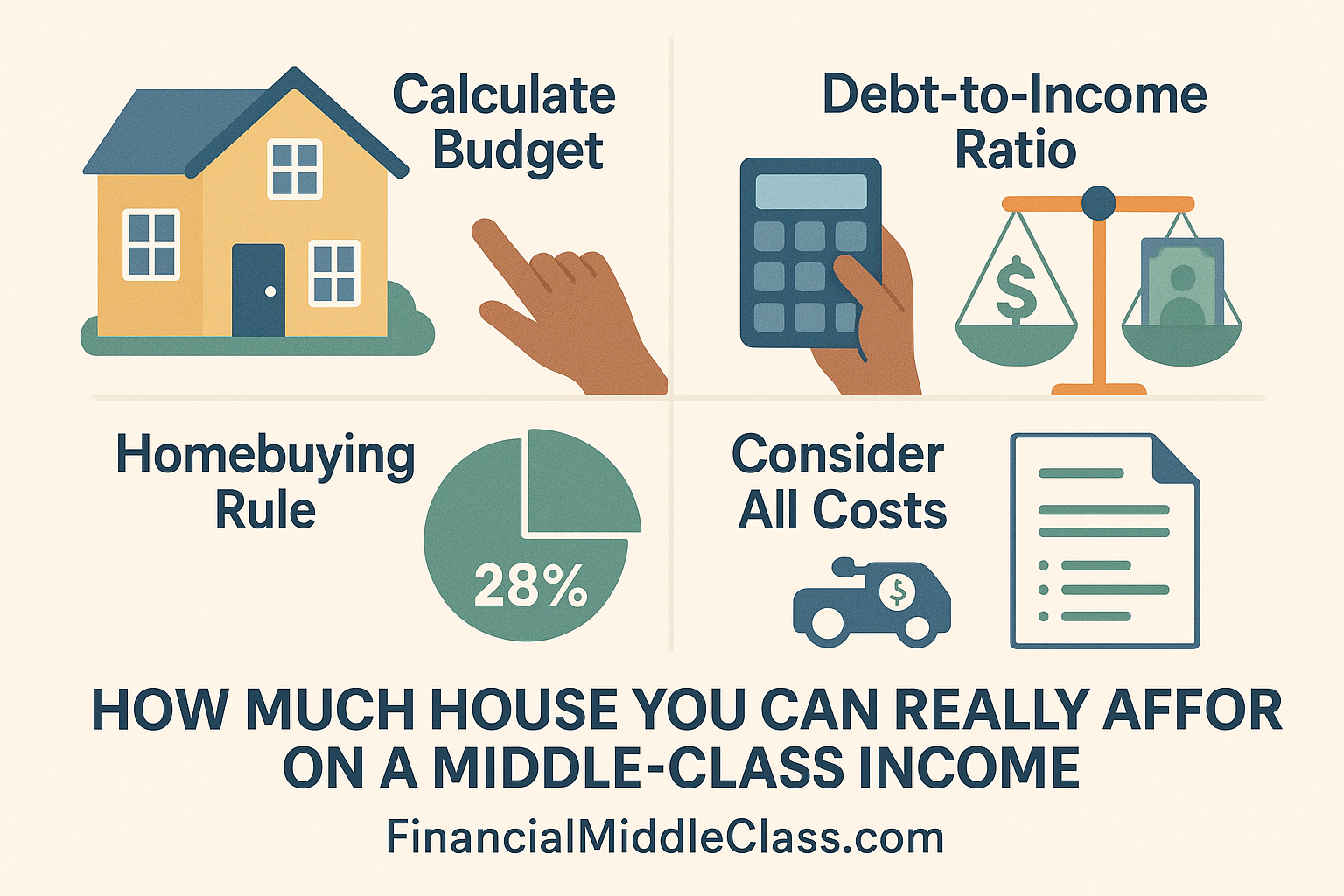
Financial Middle Class infographic showing how much house you can really afford on a middle-class income using DTI rules.
How much house a middle-class income can really support, using realistic debt-to-income rules.

The housing market doesn’t care how hard you work. It cares about your income, your debt, your credit, and what the bank’s models say you can survive without defaulting.

That’s why so many middle-class buyers get whiplash. Their income feels solid. Their lifestyle feels “normal.” Then a calculator tells them they “can afford” a price tag that would swallow half their take-home pay.

Lenders use one definition of “afford.” Your actual life needs another.

This guide walks you through both, with a simple on-page calculator to show how much house you can really afford—not just what a pre-approval email says.

The 28/36 Rule vs Lender Max: Two Very Different Answers

The mortgage industry has a simple rule of thumb: spend no more than about 28% of your gross income on housing, and 36% total on all debt (housing, cards, car, student loans). Lenders often stretch beyond this, but that’s their risk model, not your quality of life.

Approach Housing % of Gross Income Total Debt % of Gross Income Real-Life Feel
Classic 28/36 Rule ≤ 28% ≤ 36% Balanced. Room for savings, kids, cars, and an emergency fund.
“We Can Stretch You” Lender Max 30–35% (or more) Up to low 40s+ Looks fine on paper; feels like constant pressure in real life.
Financial Middle Class “Stay Sane” Zone Closer to 25–28% Under 36%, ideally closer to low 30s You can own a house and still have a life, savings, and options.

Your job is to pick which column you want to live in, not just which one you can pass underwriting in.

How Much House Can You Afford? (Interactive Calculator)

Instead of just guessing, use this how-much-house calculator to see what price range actually fits your income and debt, based on the 28/36 rule.

How Much House Can You Afford?

Financial Middle Class

This tool uses the classic 28/36 debt-to-income rule and your own numbers to estimate a safe maximum home price.


Side-by-Side: Lender Max vs Middle-Class Sanity

Let’s look at an example. Say your household makes $96,000 a year ($8,000 a month) and you have $600 in other monthly debt payments.

Scenario Lender-Stretch Approval Financial Middle Class Range
Housing % of gross 32–35% 25–28%
Total debt % of gross High 30s to low 40s Low–mid 30s
How it feels month to month Vacation, savings, and car repairs all feel like stress. You can save, replace a car, and still have a life.
Risk if one income drops Immediate pressure; high risk of credit card use or missed payments. Painful, but survivable with an emergency fund and cuts.

Your goal is not “What’s the biggest house I can stand?” It’s “What’s the house I can own and still sleep at night?”

Three Filters for How Much House You Can Afford

Before you chase listings, run your situation through three filters: income, stability, and life goals.

Filter 1: Income and Debt

Use the calculator above to translate your income and debt into a maximum PITI payment and price range. If the number feels smaller than what Zillow is flashing at you, that’s not a glitch. That’s your real life talking.

Filter 2: Job and Lifestyle Stability

If your job or industry is volatile, your target should be even more conservative. The same is true if you know big expenses are coming: kids, daycare, caring for parents, replacing an aging car.

Profile Housing Target Why
Stable job, two incomes, good savings Up to ~28% of gross You can handle some volatility and still save.
Single income, variable pay, kids Closer to 20–25% of gross You need more margin; the job and life load are heavy.
High earners with lumpy bonuses Base salary supports the payment; bonus is extra. Never build a mortgage on income that isn’t guaranteed.

Filter 3: Your Actual Priorities

Some people want the biggest house and don’t care about travel. Others care more about flexibility, investing, or early retirement. Those aren’t wrong answers—but the house has to fit them.

If you say travel, kids’ activities, giving, and saving matter, and then buy a house that eats every free dollar, you didn’t just buy a home. You bought a contradiction.

Next Steps: Turn the Number Into a Plan

Here’s how to use what you just learned:

  • Run your numbers through the How Much House You Can Afford calculator and note the price range.
  • Drop that range by 5–10% if your job or life is unstable, or if you want aggressive savings.
  • Make that lower number your hard cap when you’re looking at houses.

Then line this article up with:

Your goal is not to impress a lender or Instagram. Your goal is to own a home that still lets you be a person.

FAQs: How Much House You Can Really Afford

How much of my income should my mortgage be?

A common guideline is to keep total housing costs—principal, interest, taxes, insurance, and HOA fees—at or below 28% of your gross monthly income. Many middle-class households feel better closer to 25%, especially if they have kids or variable income.

How much total debt is too much when buying a house?

The classic rule is that all debt payments combined (housing + other debts) should stay at or below 36% of gross income. Lenders may approve you above that, but pushing into the 40s is where people start feeling house poor.

Should I buy at the top of my pre-approval?

Usually, no. Pre-approval is the lender’s risk limit, not your lifestyle limit. If the top of your pre-approval leaves no room for savings or surprises, scale back until you can do both: own the home and build wealth.

Does a higher down payment mean I can afford more house?

A larger down payment can lower your monthly payment and help you avoid PMI, but it doesn’t magically change your income or job stability. If putting more down empties your emergency fund, you’re increasing risk, not reducing it.


BACK TO TOP
Continue Reading
Click to comment

Leave Comment

American Middle Class / Dec 01, 2025

Common First-time Homebuyer Mistakes That Quietly Wreck Your Budget

Avoid the quiet first-time homebuyer mistakes that wreck your budget. Learn how to protect your...

American Middle Class / Dec 01, 2025

How Much House You Can Really Afford on a Middle-class Income

See how much house a middle-class income can truly afford using simple rules, debt-to-income guardrails,...

American Middle Class / Dec 01, 2025

Creating an Emergency fund so Your House Payment Never Becomes a Crisis

Build an emergency fund that protects your mortgage payment from job loss, repairs, and real-life...