
Are Big Market Cap Companies Too Big to Fail
The estimated reading time for this post is 179 seconds
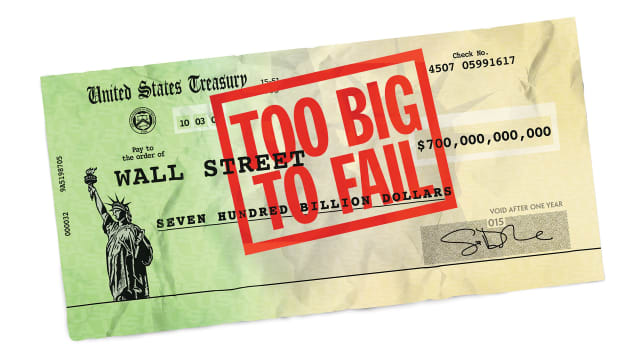
Too big to fail banks and nonbank financial companies are still a problem. Moreover, many companies across new sectors and industries have become part and parcel of the U.S. economy. They have significant systematic risk, and their failure will be disastrous to the domestic and global economies.
Banks and non-bank financial companies such as American International Group (AIG) and the Federal National Mortgage Association (Fannie Mae) ushered in the worst economic downturn since the Great Depression.
Thirteen years after the 2008 financial crisis, big market cap organizations, mainly those with a $ trillion or more, can also be considered too big to fail.
Market capitalization, aka market cap, is the total dollar market of a company’s outstanding shares of stock.
Are Big Market Cap Companies Too Big to Fail?
After the 2008-09 financial crisis, Congress passed, and President Obama signed the Dodd-Frank to prevent private companies from becoming too big to fail by expanding regulatory oversight to nonbank systematically-important companies.
The expanded oversight did not address multinational corporations that are not part of the financial sector but are interconnected to the whole economy and have millions of shareholders and stakeholders.
When the Dodd-Frank passed in 2010, no U.S.-based companies had a market capitalization of a$1 trillion. Now, four firms meet that criterion, including Amazon.
The Seattle-based company is not a bank nor a nonbank financial firm, but it is an integral part of the American consumers and deeply ingrained in the global economy.
Do taxpayers have to bail out Amazon to prevent the U.S. economy from collapsing if the giant e-retailer finds itself in Tyco International-like accounting scandal?
Let’s review those four companies’ supply-chains and stakeholders to assess their systematic risk and threats to the U.S. economy.
U.S. Companies with a Market Cap of $1 trillion or More

Too big to fail
On August 2, 2018, Apple because the first U.S. company to hit $1 trillion in value. Since then, a few companies have reached those milestones. However, as of this writing, only the four companies below have a market cap of $1 trillion or more:
Apple
Apple has a market cap of $2.663 trillion with 80 000 employees, 450,000 jobs through its U.S.-based suppliers, and more than 9,000 U.S. suppliers and manufacturers.
The Cupertino-based technology company claims an additional 1,530,000 U.S. jobs attributable to its App Store ecosystem.
Microsoft
Microsoft Corporation has a market cap of $2.173 trillion with more than 180 000 employees and more than 58,000 suppliers.
More than 1 billion people worldwide use the Washington-based firm’s office product or service.
Alphabet
Alphabet has a market cap of $1.745 trillion with more than 156,500 and 1,000 suppliers in 70 countries.
Billions of people use the Mountain View-based conglomerate’s core products, including Android, Chrome, Gmail, YouTube, Google Pixel, and more.
Amazon
Amazon has a market cap of $1.482 trillion with more than 1.1 million employees and 200,000 U.S. suppliers. 1 out of every 153 American workers is an amazon employee.
In 2021, the Seattle-based retail giant said it planned to buy more than $120 billion worth of supplies, services, and equipment from American suppliers.
Conclusion
All four companies with a market cap of $1 trillion or more are deeply ingrained in the U.S. economy. They have more than 1.6 million employees and 270,000 U.S. suppliers and manufacturers. Moreover, billions of American consumers use their core products daily.
Big multinational conglomerate companies, just like the banks and nonbank financial companies, are too big to fail.
The failure of any of those four companies can unravel the entire economy. American taxpayers need to get ready to bail them out if they experience any distress.

