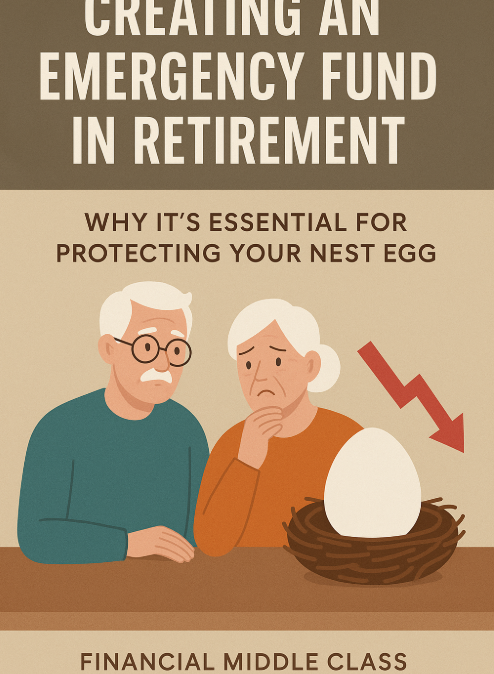
Creating an Emergency Fund in Retirement: Why It’s Essential for Protecting Your Nest Egg
By Article Posted by Staff Contributor
The estimated reading time for this post is 199 seconds
When most people think about emergency funds, they picture young families or working professionals setting aside cash for unexpected car repairs or job loss. But here’s the truth few talk about: retirees need emergency funds just as much — if not more.
Why? Because once you’re retired, you’re living off fixed income streams and investment accounts. Without a cash cushion, a sudden expense can push you to sell investments during a market downturn — locking in losses that could have been avoided. An emergency fund in retirement isn’t just a safety net. It’s a shield that protects your hard-earned nest egg.
The Danger of Relying Only on Investments
Imagine this scenario: you’re retired, and the stock market takes a dive. At the same time, your roof springs a leak or a medical bill arrives. If you don’t have an emergency fund, you may be forced to sell stocks when prices are down, turning a temporary paper loss into a permanent financial hit.
This is known as “sequence of returns risk” — pulling money from investments at the wrong time early in retirement can have devastating long-term effects on your portfolio.
Lesson: Having liquid cash ready means you don’t have to raid your investments when the market is volatile.
Why Retirees Need an Emergency Fund
- Market protection. Cash prevents you from selling investments in down markets.
- Healthcare costs. Even with Medicare, out-of-pocket expenses, prescriptions, and long-term care add up.
- Home repairs. Roofs, appliances, and plumbing don’t care that you’re retired.
- Family support. Retirees often help adult children or grandchildren financially — sometimes unexpectedly.
- Peace of mind. Knowing you have a buffer keeps you from constantly worrying about market headlines.
How Much Should Retirees Save?
The general rule of thumb for retirees: 12 to 24 months of essential expenses.
- If your monthly essentials (housing, food, insurance, medical costs) total $4,000, aim for $48,000 at minimum.
- For added peace, especially if your portfolio is heavily invested in stocks, consider 18–24 months.
Unlike workers who can replenish an emergency fund with future paychecks, retirees need a larger cushion since their income streams are fixed.
Step 1: Keep It Separate
Open a dedicated savings account just for emergencies. Keeping it apart from checking or spending accounts makes it less tempting to dip into. A high-yield savings account or money market account works well.
Step 2: Replenish After Use
If you need to tap your emergency fund, make a plan to rebuild it. Maybe you redirect some investment withdrawals over the next 12 months or cut back temporarily on discretionary spending. The goal is to always keep your safety net intact.
Step 3: Don’t Confuse It With “Cash Flow”
Retirees often think, “My pension or Social Security is enough.” But those payments cover regular living costs, not sudden emergencies. An emergency fund should sit on top of those income streams, ready for the unexpected.
Step 4: Balance Liquidity and Growth
Your emergency fund should be safe and accessible — not tied up in risky investments. That doesn’t mean all your money should sit in cash. It means carving out a portion of your portfolio specifically for liquidity while the rest continues to grow.
The Bottom Line
An emergency fund isn’t just for working families. Retirees without one risk sabotaging their own retirement plans by being forced to sell investments in down markets. Having a year or more of cash on hand buys you flexibility — flexibility to ride out storms, keep your portfolio intact, and enjoy retirement without unnecessary financial stress.
Related Reads:
How to Minimize Debt Later in Life
Estate Planning for Millennials: Why It’s Not Just for the Elderly
Life Insurance and Debt: How to Protect Your Family
Zero-Based Budgeting for Families: Planning Beyond Today
Call-to-Action
If you’re already retired — or nearing retirement — take a hard look at your cash reserves. Start setting aside enough to cover at least 12 months of expenses. Your future self will thank you when the market dips and your nest egg stays safe.

RELATED ARTICLES
Does Retiring the U.S. Penny Nudge America Further into a Cashless Future?
The estimated reading time for this post is 414 seconds Introduction: A Tiny Coin, a Loud Message In February 2025, President Trump told Treasury to stop making new pennies, calling the coin wasteful because it cost almost four cents to...
From FDR’s 30-Year Breakthrough to Trump’s 50-Year Pitch: Is This Still About Homeownership — or Just Smaller Payments?
The estimated reading time for this post is 375 seconds In the 1930s, Franklin D. Roosevelt’s team looked at a housing market full of short, risky mortgages and said: we’re going to redesign this so regular people can actually buy...
Leave Comment
Cancel reply
Does Retiring the U.S. Penny Nudge America Further into a Cashless Future?
From FDR’s 30-Year Breakthrough to Trump’s 50-Year Pitch: Is This Still About Homeownership — or Just Smaller Payments?
Racial gaps in retirement plans leave Black, Hispanic workers with fewer benefits
Gig Economy
American Middle Class / Nov 12, 2025
Does Retiring the U.S. Penny Nudge America Further into a Cashless Future?
The estimated reading time for this post is 414 seconds Introduction: A Tiny Coin, a Loud Message In February 2025, President Trump told Treasury to stop...
By Article Posted by Staff Contributor
American Middle Class / Nov 11, 2025
From FDR’s 30-Year Breakthrough to Trump’s 50-Year Pitch: Is This Still About Homeownership — or Just Smaller Payments?
The estimated reading time for this post is 375 seconds In the 1930s, Franklin D. Roosevelt’s team looked at a housing market full of short, risky...
By Article Posted by Staff Contributor
American Middle Class / Nov 10, 2025
Racial gaps in retirement plans leave Black, Hispanic workers with fewer benefits
The estimated reading time for this post is 300 seconds Black and Hispanic workers who do everything right — enroll in their employer’s 401(k) or 403(b),...
By FMC Editorial Team
American Middle Class / Nov 09, 2025
FICO Says Scores Are Slipping to 715 — Here’s What’s Actually Driving It (and How to Stay Out of the Downward Group)
The estimated reading time for this post is 499 seconds Introduction: The latest FICO® Score Credit Insights report shows something easy to miss if you only...
By Article Posted by Staff Contributor
American Middle Class / Nov 09, 2025
Why So Many Middle-Class (and Upper-Middle-Class) Households Can’t Stick to a Budget
The estimated reading time for this post is 615 seconds There’s a quiet tax on the American middle class, and it’s not just the one you...
By MacKenzy Pierre
American Middle Class / Nov 09, 2025
Reverse Mortgages for Middle-Class Families: Relief, or Just Eating the Inheritance?
The estimated reading time for this post is 509 seconds Too many middle-class Americans are taking care of two generations at once. You’ve got a kid...
By Article Posted by Staff Contributor
American Middle Class / Nov 08, 2025
Hosting Without the Hangover: Potluck Math That Actually Works
The estimated reading time for this post is 281 seconds Too many of you are cooking for 25 when 12 RSVPed. That’s why hosting feels expensive....
By Article Posted by Staff Contributor
American Middle Class / Nov 08, 2025
The One-Gift Rule: How to Stop Holiday Gift Inflation Without Looking Cheap
The estimated reading time for this post is 339 seconds “Setting a One-Gift Rule to protect the family budget” — Financial Middle Class Too many of...
By Article Posted by Staff Contributor
American Middle Class / Nov 06, 2025
Office gifting + Secret Santa: what’s actually fair
The estimated reading time for this post is 449 seconds December is sneaky. It’s the one month where three different money cultures collide: the office wants...
By Article Posted by Staff Contributor
American Middle Class / Nov 05, 2025
Understand Financial Stressors — and Know How to Cope with Them
The estimated reading time for this post is 584 seconds Too many of you are stressed about money and think it’s because you “just need to...
By Article Posted by Staff Contributor
Latest Reviews
American Middle Class / Nov 12, 2025
Does Retiring the U.S. Penny Nudge America Further into a Cashless Future?
The estimated reading time for this post is 414 seconds Introduction: A Tiny Coin, a...
American Middle Class / Nov 11, 2025
From FDR’s 30-Year Breakthrough to Trump’s 50-Year Pitch: Is This Still About Homeownership — or Just Smaller Payments?
The estimated reading time for this post is 375 seconds In the 1930s, Franklin D....
American Middle Class / Nov 10, 2025
Racial gaps in retirement plans leave Black, Hispanic workers with fewer benefits
The estimated reading time for this post is 300 seconds Black and Hispanic workers who...